Cycling in Sikkim, as we went bikepacking from Gangtok to Ravangla and Tashiding in West Sikkim in November 2026. This is the first of the trilogy…
“But why do cyclists like climbing hills so much?”
“Because they like suffering.”
“But, why do cyclists like to suffer so much?”
“Probably the same reason people get married. They’re suckers for punishment!”
With these inspiring thoughts, we two cyclists decided not just to marry each other, but also go climb some hills.
The Eastern Himalayas are a full-blown existential audit. Sikkim does not believe in gentle introductions a la arranged marriages. Here, the roads go straight up until your lungs stage a walkout, and straight down until your brakes beg for mercy. It’s more like right swiping on Tinder.
Day 0: Bangalore to Gangtok: Shoes, Bribes, and Dosa in the Hills
Before a single pedal stroke could be turned, we had the customary city-to-mountains transit. Landing at Bagdogra, we hopped into a cab driven by Prakash, a local chap with a wonderfully flexible moral compass. Being a Saturday, he dutifully stopped by his house to pick up a strict no-onion, no-garlic vegetarian lunch, all the while cheerfully regaling us with his elaborate plans to get thoroughly drunk that very night.
The Hills Are Alive…
As we wound our way up the Bengal hills toward the Sikkim border, two things stood out. First, the sheer number of dosa shops dotting the Himalayan foothills, reminiscent of the extraordinary number of fried rice shops I had encountered on a recent trip to Tamil Nadu. Second, Prakash’s enthusiastic curation of our road-trip playlist. Having clocked that Chaitra was from South India, he promptly blasted Telugu hits, seemingly oblivious to the fact that none of us sitting in that car could understand a word!
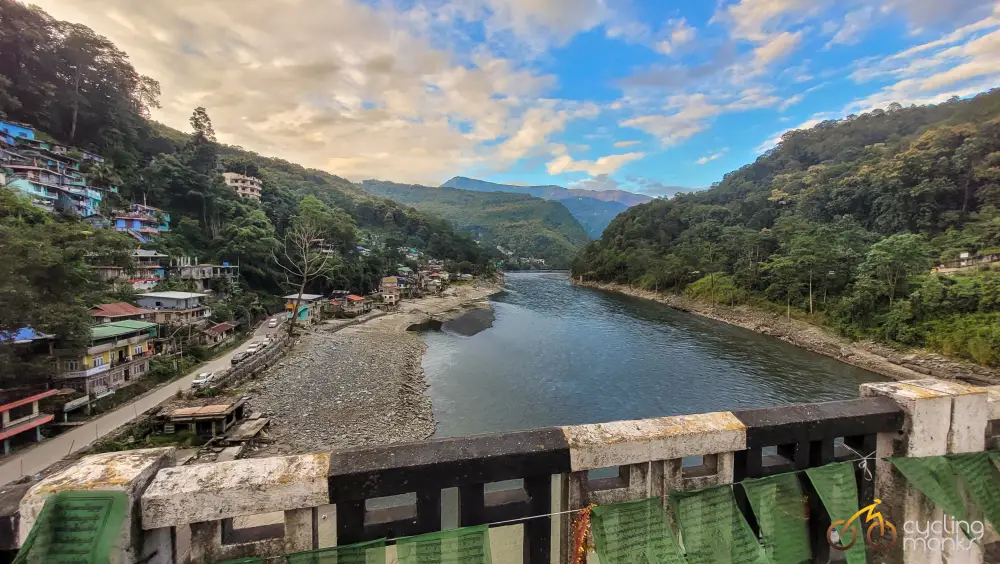
We stopped at a bridge overlooking the emerald Teesta River, where Prakash promised us the most incredible, hair-blowing breeze known to humanity. Spoiler alert: not a whiff of wind, unless you decided to pass some wind yourself.
Just before crossing the state border, Prakash pulled over to wear his shoes. He told us, Sikkim police take footwear very seriously; driving in slippers is a punishable offence. However, wearing shoes wasn’t enough to ward off the local law enforcement. Just past Singtam, we were flagged down by a group of Sikkim cops, most of whom weren’t in uniform, casually stopping every vehicle in sight. We wasted a good twenty minutes watching an intense diplomatic negotiation, as Prakash told us that he had been haggling over a bribe, before being waved on. Add another pitstop to rescue Prakash’s friend who had burnt his clutch plates on the steep inclines, and we finally rolled into Gangtok by 7 PM.
Gangtok
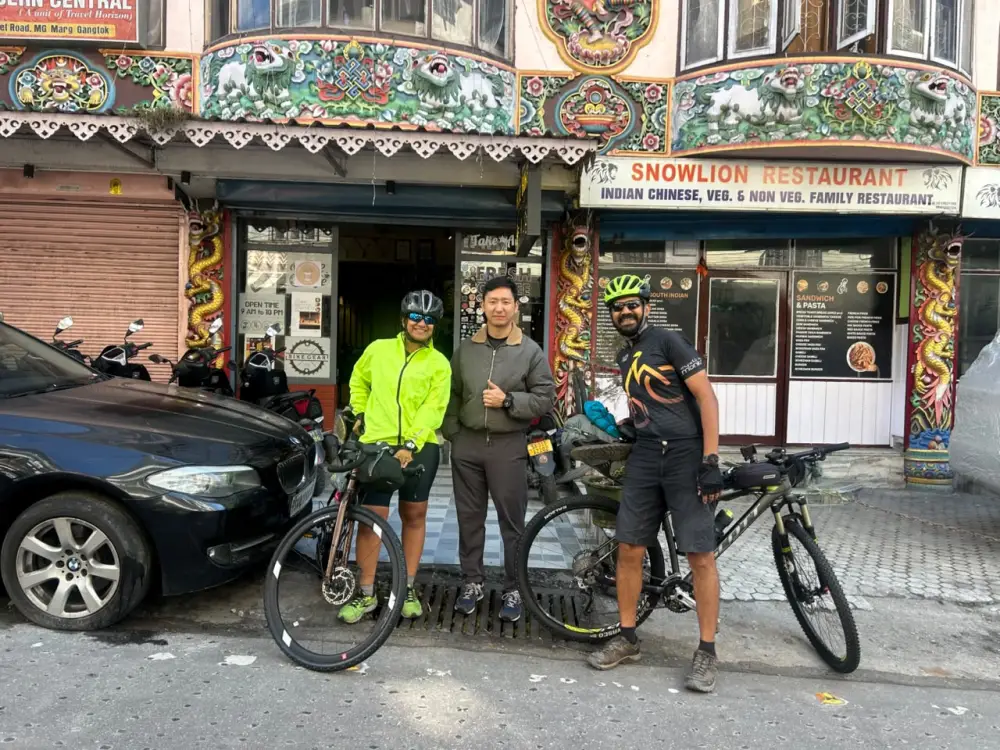
Fortunately, Hill Bike on Tibet Road was open till 8:30 PM. We met Dorjee, Phuntshok’s younger brother, and spent a wonderful evening chatting about bicycles, touring, and food while I assembled our steeds which we had previously couriered there. It was a relief to find our bikes had reached safely and were in the protective care of the Chopel brothers.
On Dorjee’s recommendation, we sprinted over to Taste of Tibet for dinner. Even in the capital city, everything is shuttered by 10:30 PM, forcing us to order and knock down egg fried rice and local beef sausages at record speed. Thus began our Sikkimese adventure, with the bicycles assembled, stomachs full and legs blissfully unaware of what awaited them.
Day 1: Gangtok to Rumtek: A 666-Metre Preview
Waking up in the crisp mountain air, we strapped our bikepacking bags onto the cycles and headed back to Hill Bike. Dorjee was gearing up for a morning spin of his own, and we also finally met Phuntshok, who had helped us plan this trip. He was happy to see us bikepacking as he had ridden the Annapurna Circuit earlier in the year. In that brief duration we met three other local cyclists, including a gentleman who had run the Ladakh Marathon.
Feeling suitably humbled by legitimate Himalayan endurance athletes, we topped up our tyres and rolled out at a fashionably late 11:11 AM. Everybody in Sikkim is fashionable, we on the other hand were just late.
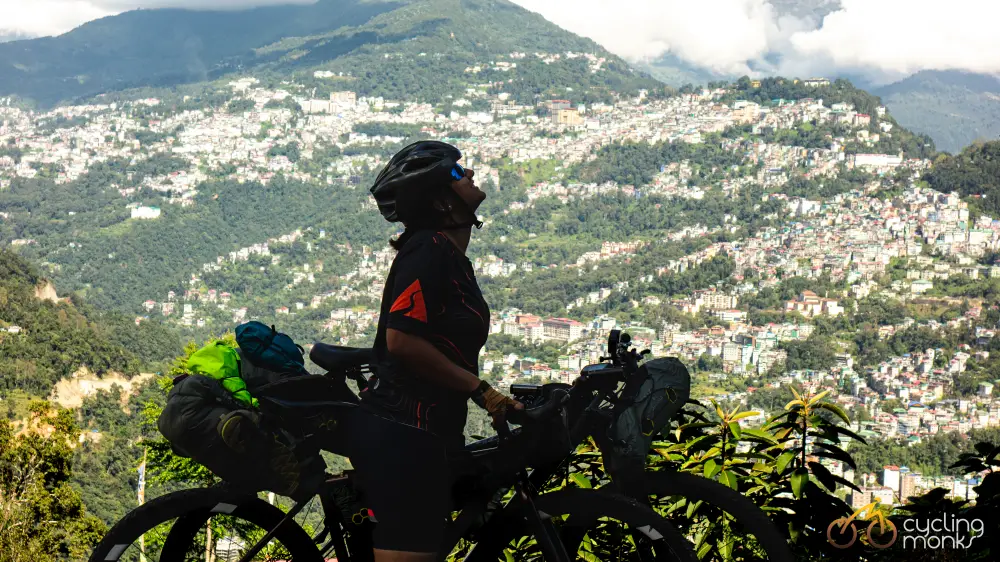
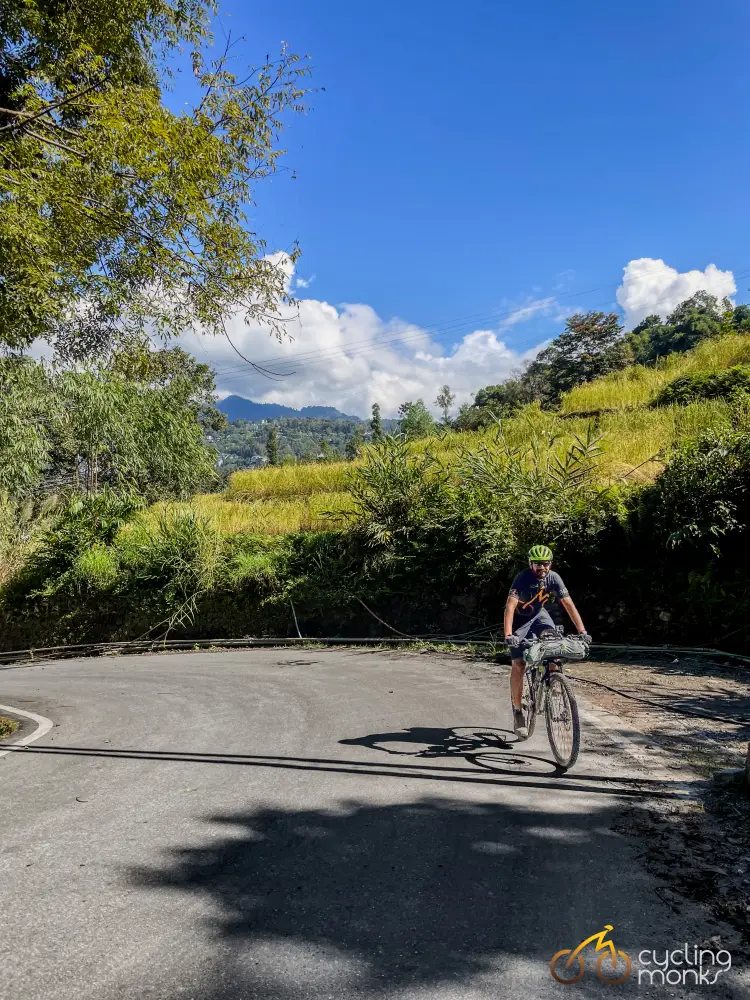
Gangtok, sitting at roughly 1,500 metres, bid us farewell with an immediate steep descent out of town, dropping nearly 700 metres down to the valley floor near Ranipool over the first 9 kilometres. Turning off the main highway toward Rumtek Monastery, the road promptly tilted skyward.
Lessons in Humility
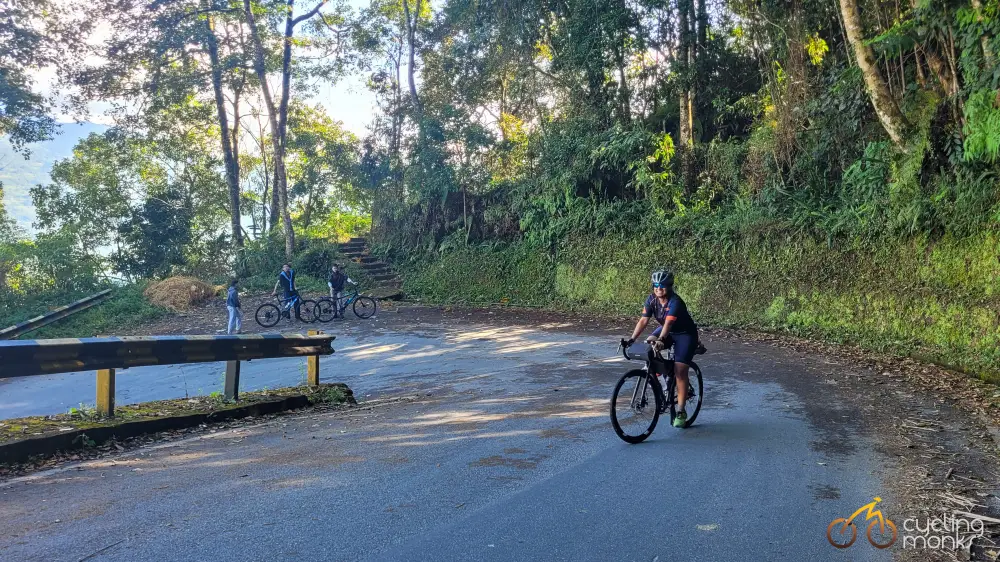
That 9.6 km climb to Rumtek was a trailer for the rest of our trip: elevation gained at a relentless average gradient of 6.9%, crawling upward at a blistering 3.8 km/h. The Strava elevation total for the day clocked in at an ominous 666 metres, the mountains sending a message loud and clear.
While riding up we were accosted by three kids on two cycles. They chatted with me and asked about the price and specs of the bikes. As a matter of habit, I mentioned my cycle costed 20k. Normally in small towns of India, people look incredulously, ‘sooooo expensive’. But not here. The oldest of the trio looked at me and pointed out that his Hero cycle was 10k. Then he listed out all the Shimano gears, brakes, and other drivetrain bits on my MTB, giving me the price of each. He had rote learnt the entire price list of Shimano! I asked if he paid so much attention in his school studies, he brushed off my wiseass quip, and told me, that he would happily pay 40k for my cycle if I was willing to sell.
I sheepishly put my tail between my legs and promised myself not to lie to Gen Z again. A lesson not just for me, but for Indian politicians as well!
Rumtek Finally
Halfway up the climb, we had a classic bikepacker epiphany; we had forgotten to pack chain lube. And it pinched because Dorjee had asked if we needed to lube the chains that morning before leaving. Hubris of seasoned cyclists, I tell you.
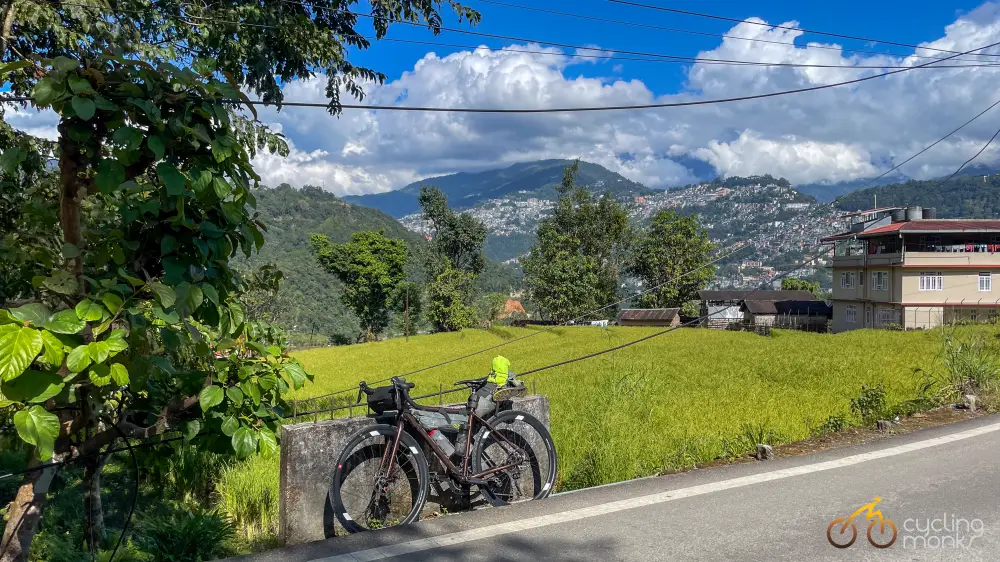
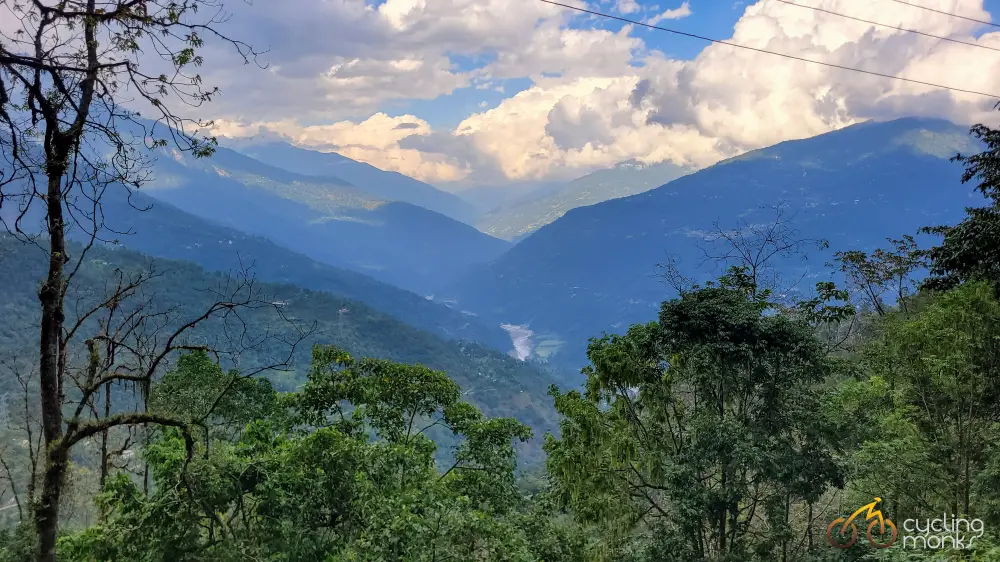
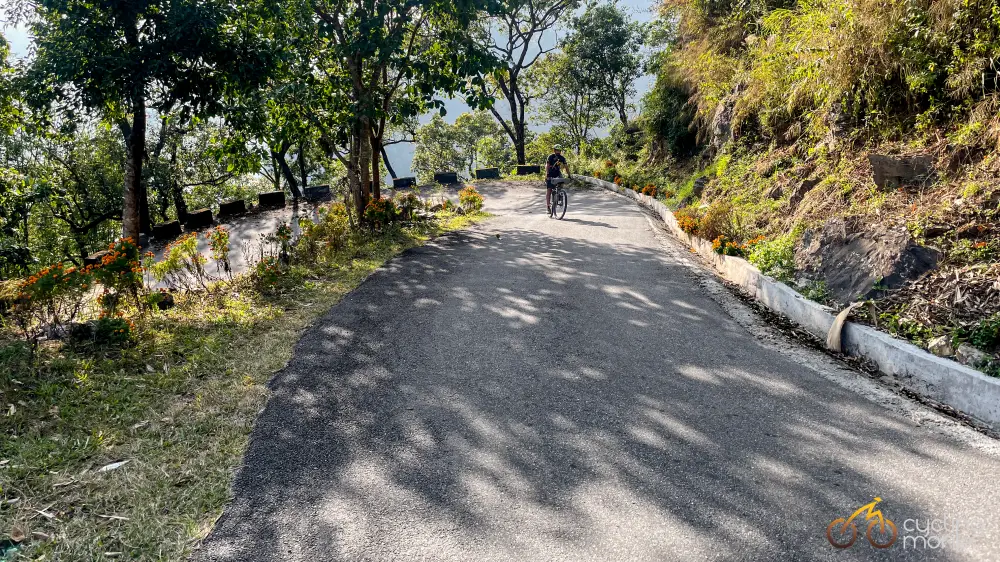
Unlike older mountain ranges with rolling plateaus, the Eastern Himalayas are geologically young and razor-sharp. Rivers like the Teesta and Rangeet have carved deep V-shaped gorges. You rarely can enjoy a leisurely ride along a ridge. Instead, you drop all the way to the river valley floor only to climb 1,000+ metres straight back up the opposite wall. A particularly cruel way to design a cycling route and for some reason we were smiling!
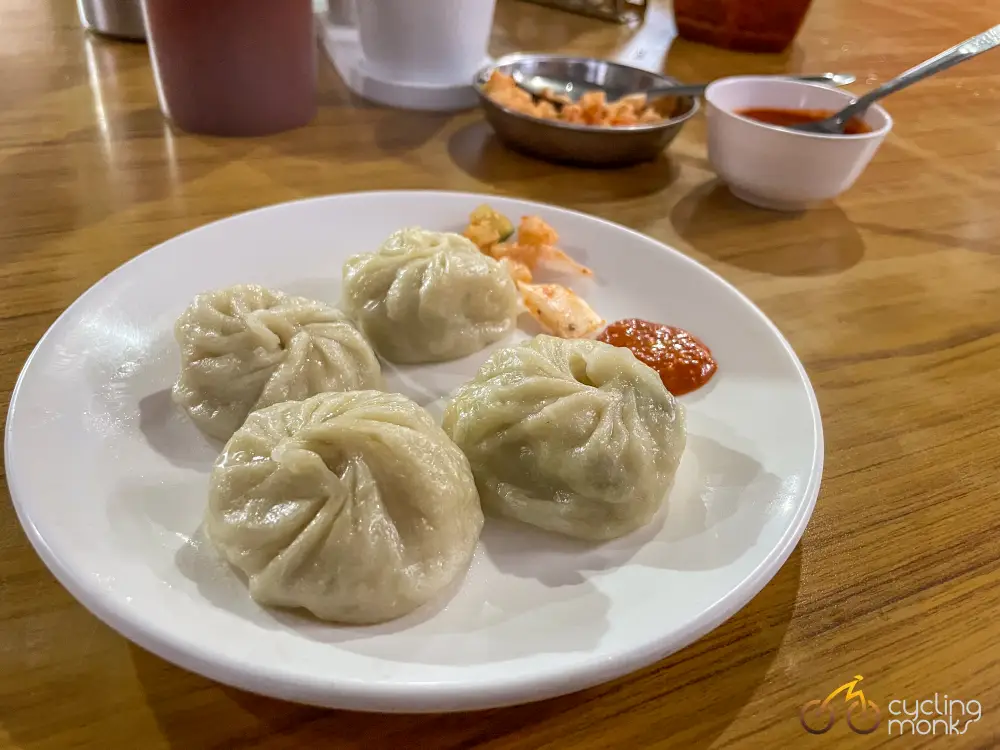
We eventually checked into a modest little hotel tucked right below a dhaba, across the road from the monastery. Steaming bowls of beef noodles and a hearty veg thali helped replenish our depleted souls.
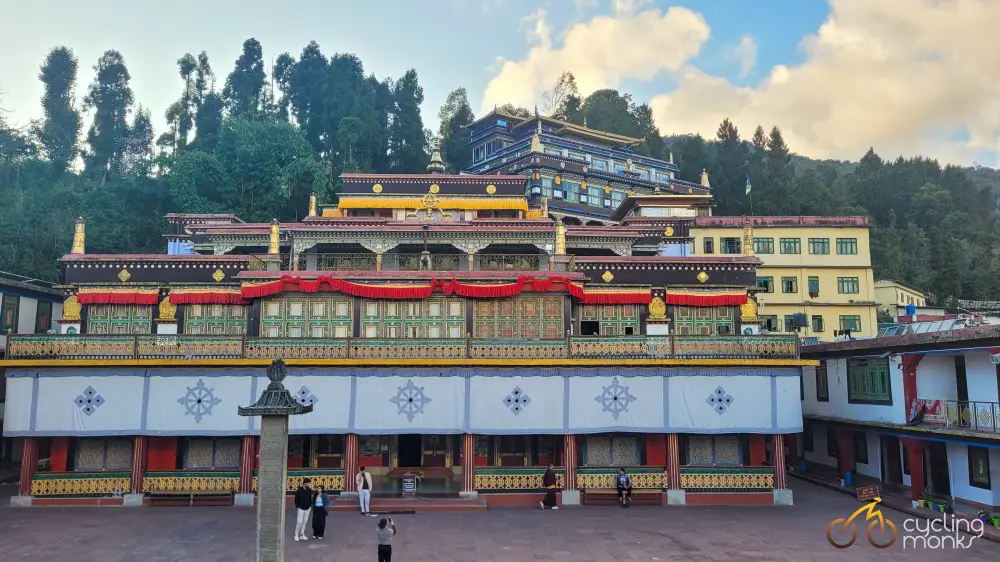
Later, we walked over to Rumtek Monastery itself, the seat-in-exile of the Gyalwang Karmapa. Unlike other monasteries we’ve visited, Rumtek is guarded by Indian paramilitary forces. The contrast between the serenity of a monastery and the might of military was disconcerting and a stark reminder of politics within religion.
After a relatively short day in the saddle, we called it a night, blissfully unaware that the following day would test us in ways that a mere 666 metres of climbing could never have prepared us for.
Day 2: Rumtek to Ravangla: Gravity, Fines, and a Sunset Bonk
This was the longest and toughest day in the saddle, or, as the first thought which crossed my mind on completion, “Bahut Hard.”
The Descent
Hoping to get a head start, we rolled out of Rumtek at 7, only to discover that no one in the mountains wakes up that early to make breakfast. On empty stomachs, we plunged down the road from Sang toward the dam near Singtam.
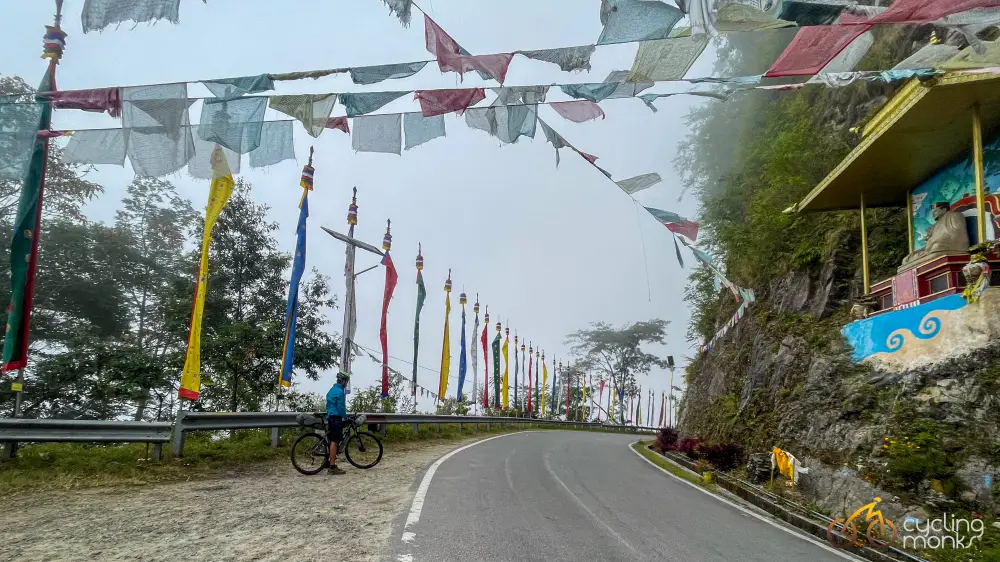
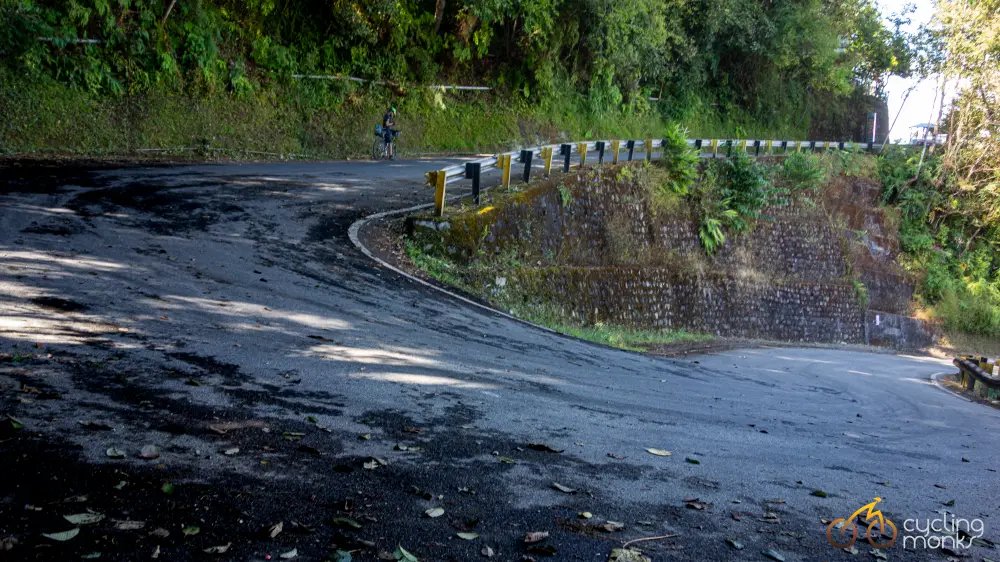
Calling it a descent is an understatement; we dropped roughly 1,100 metres in 10 km to the river basin near Singtam. It was so steep that Chaitra’s brakes began fading almost immediately. A lovely surprise courtesy of the bike shop back in Bangalore that had solemnly sworn her brake pads were “good to go.”
At every hairpin I asked her to ride up the hillside and off the road to help slow her bike down. I rode close in front of her, just in case if she couldn’t stop; she could crash into me, rather than anything worse. At such times, one doesn’t know whether to pray to the heavens or abuse the cycle shop first! The worry, stress and fear was palpable and when we reached the bottom, we were more mentally drained than the physical effort of climbing that hill.
The Smoke Break
Crossing the Adani hydel dam, we finally found salvation at one of two tiny dhabas. The eatery was run by a Nepalese cook who had previously worked construction near Majestic in Bangalore and excitedly tried out his broken Tamil on us while explaining the different districts of Sikkim.
Even more entertaining was watching the cook and local police sneak into the smoky kitchen to puff on cigarettes. Why? Because Sikkim enforces one of India’s strictest anti-smoking laws; lighting up in public attracts a whopping ₹5,000 fine! Even the cop who has to fine the public is fine smoking inside the cooking pot.
The Climb
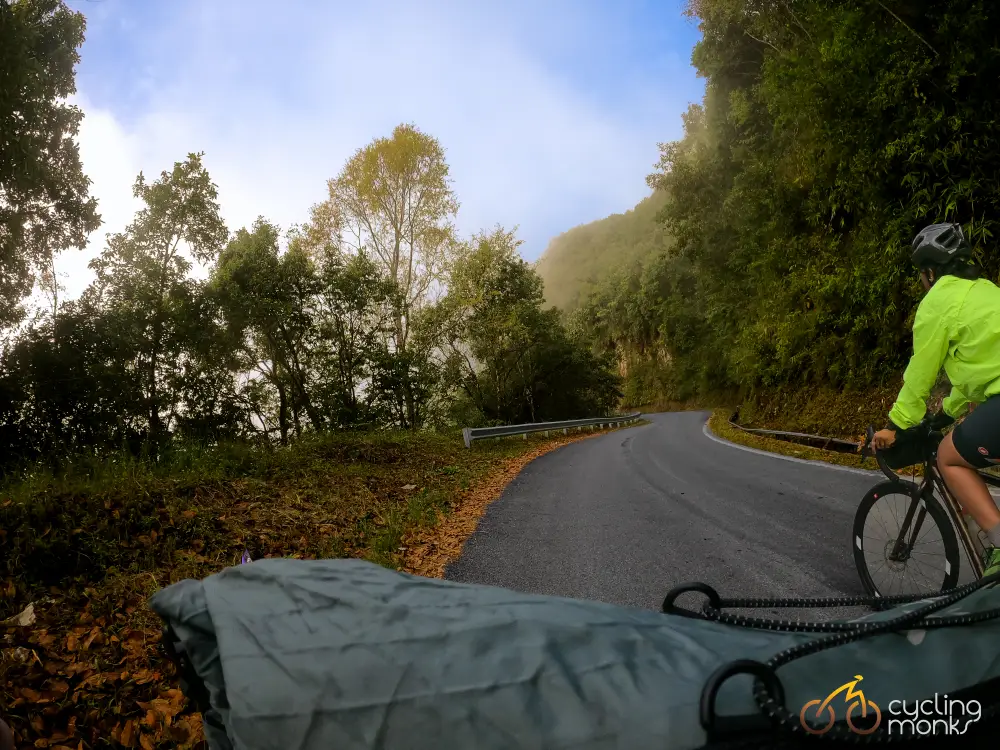
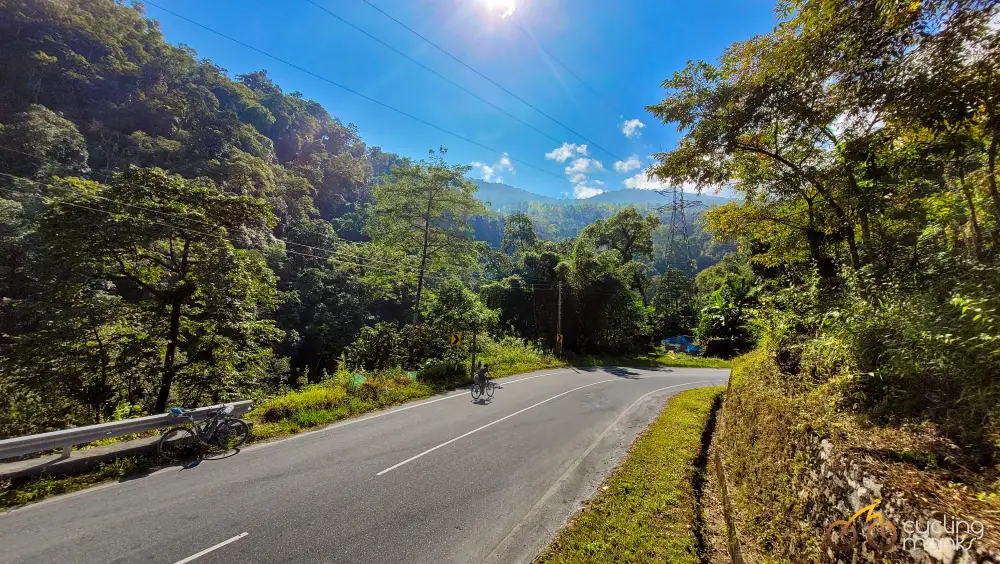
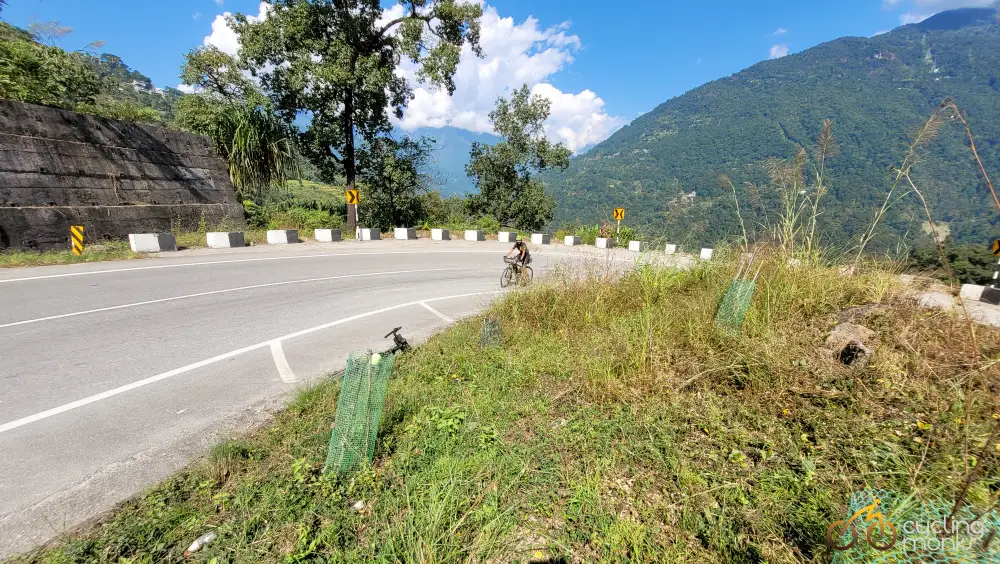
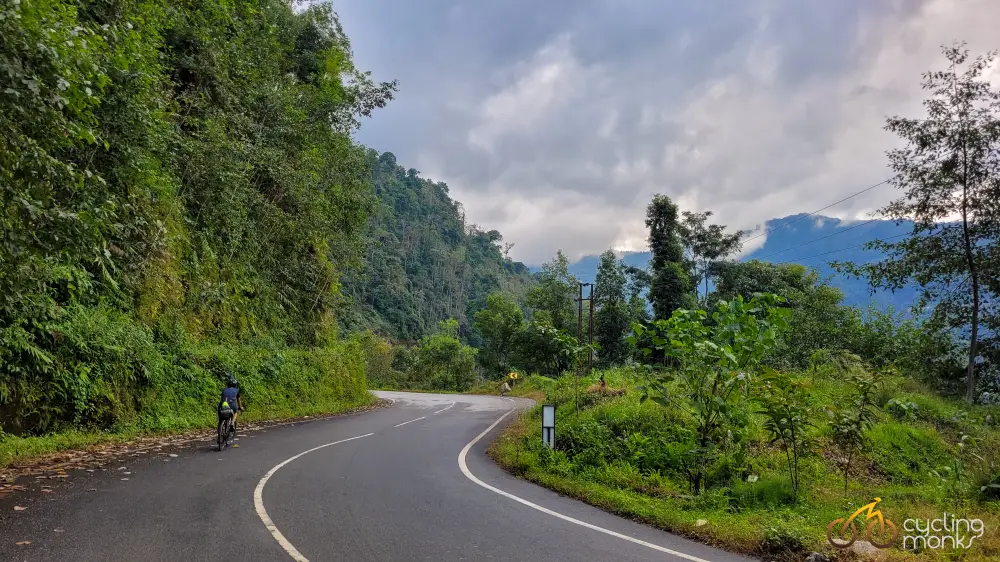
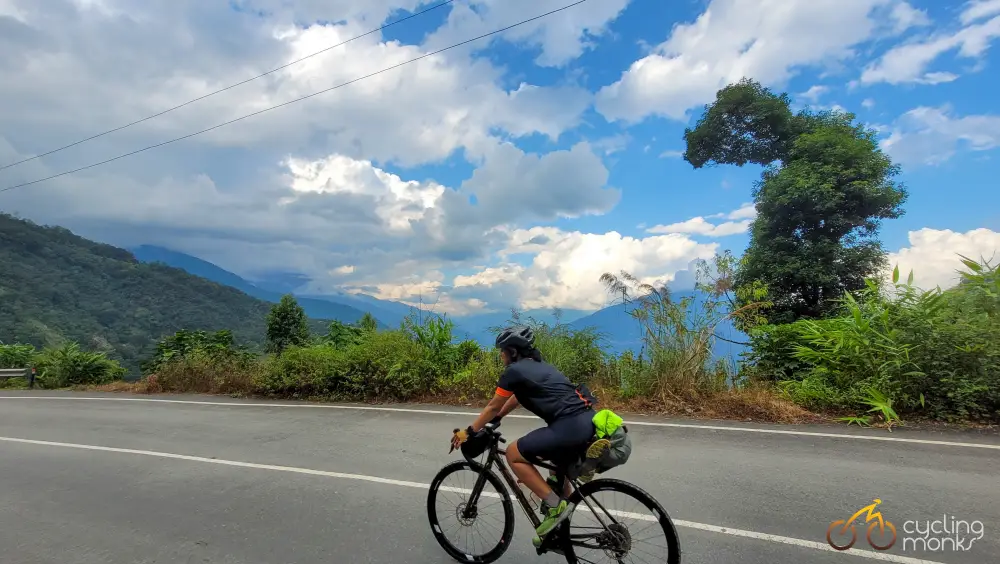
From the Teesta riverbed at the 22 km mark, the road pointed straight up for the remaining 33 kilometres, gaining a leg-shattering 2,108 metres of total elevation as we climbed past the 2,000-metre mark into Ravangla. We clawed our way out of the valley until a lunch stop just before the Temi Tea Estate turn-off. There, two cheerful locals assured us that we were climbing remarkably fast and would breeze into Ravangla in a couple of hours because “the road ahead is flat.”
It was not flat. Nothing in this part of the world is remotely flat. Pro Tip: Never believe locals in big cars about a flat world!
The climb dragged on endlessly. And lo and behold we found a motorcycle mechanic who sold us chain lube and suddenly we were happy campers again.
The Bonk
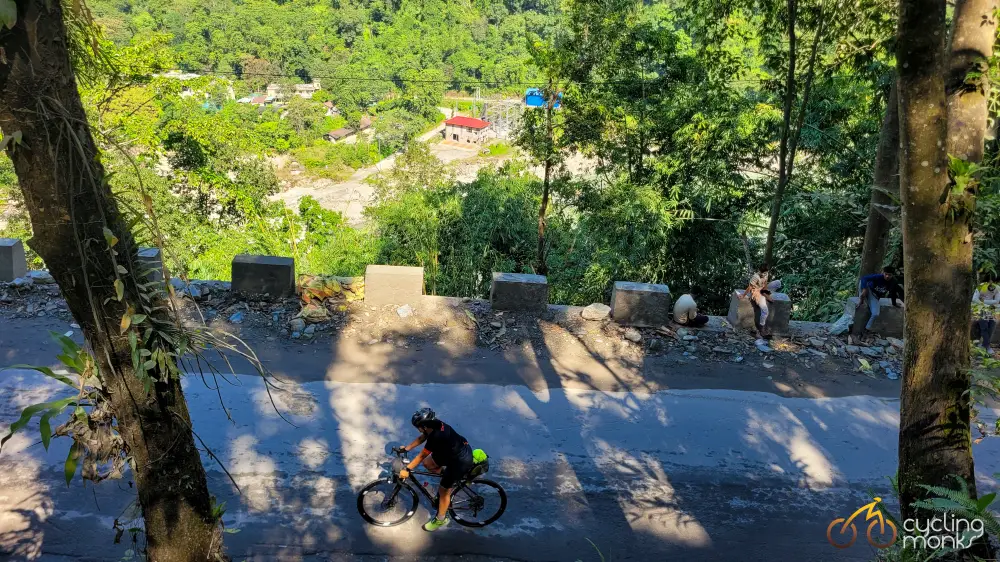
As the sun dipped behind the peaks, the temperature plummeted, and my energy tank hit absolute zero; a textbook bonk. Only the sun was supposed to set, but my blood sugar levels followed suit.
I pulled over by the roadside and staged an emergency nutritional intervention: juice, Coke, chocolate, nuts, and chips, shovelled in faster than coal in a steam engine. Chaitra was in relatively better physical condition, but I made her knock some unhealthy quantities of sugar and salt as well.
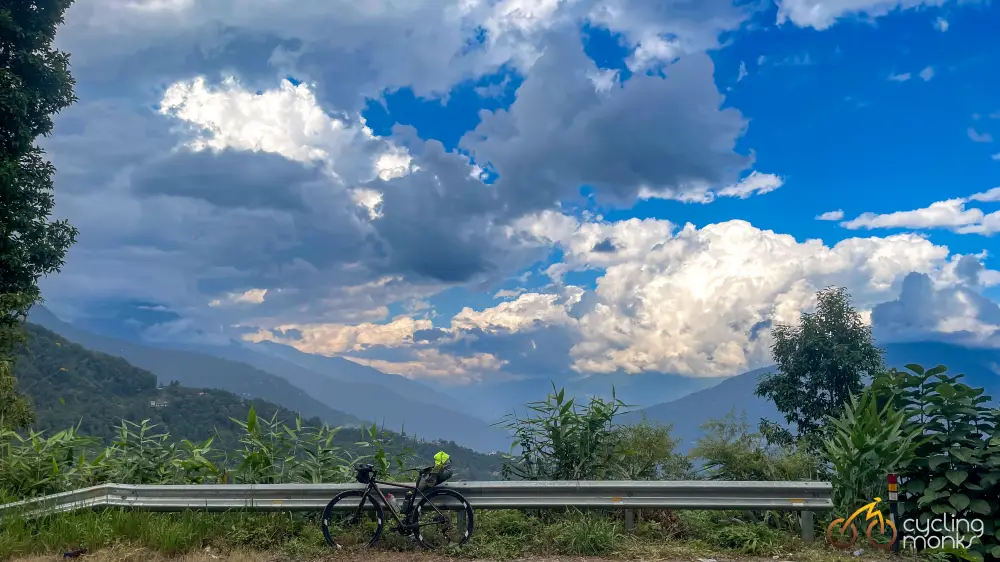
Over ten and a half hours after starting out, with our headlights switched on in the pitch dark, we finally limped into Ravangla, thoroughly humbled by the magnificent Himalayas.
After hunting around the market, we found Sikkimese Inn near Buddha Park. The place only served chicken so we walked down to the main market for dinner, tucking into a glorious pork thali. That’s when it hit us, in Sikkim, every restaurant is a bar, even when it isn’t.
After the day’s exertions, the food tasted particularly wonderful. We had survived the longest climb of the trip, but Sikkim had clearly not run out of tricks yet.
Day 3: Ravangla to Tashiding: Oranges, Storm Drains, and Churpi
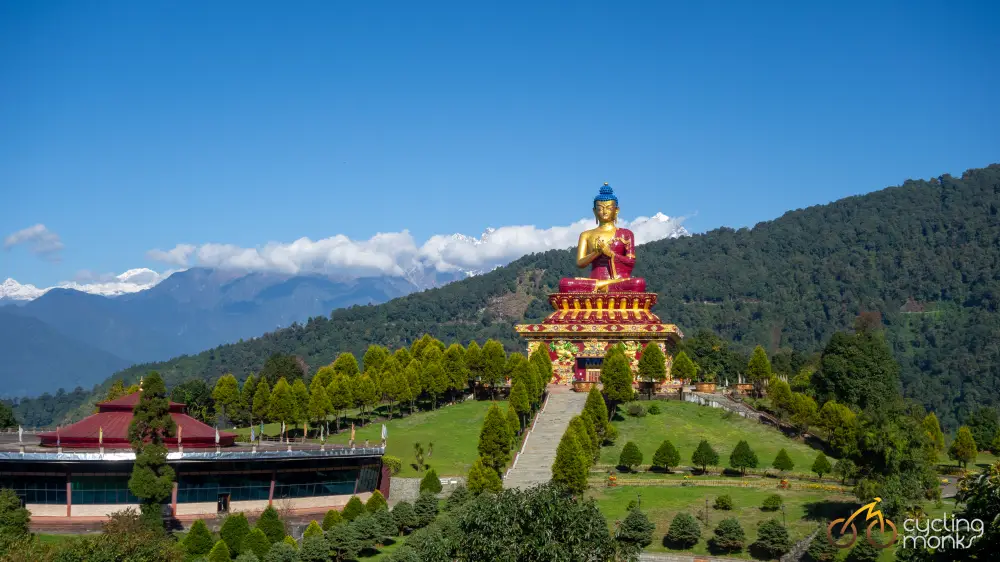
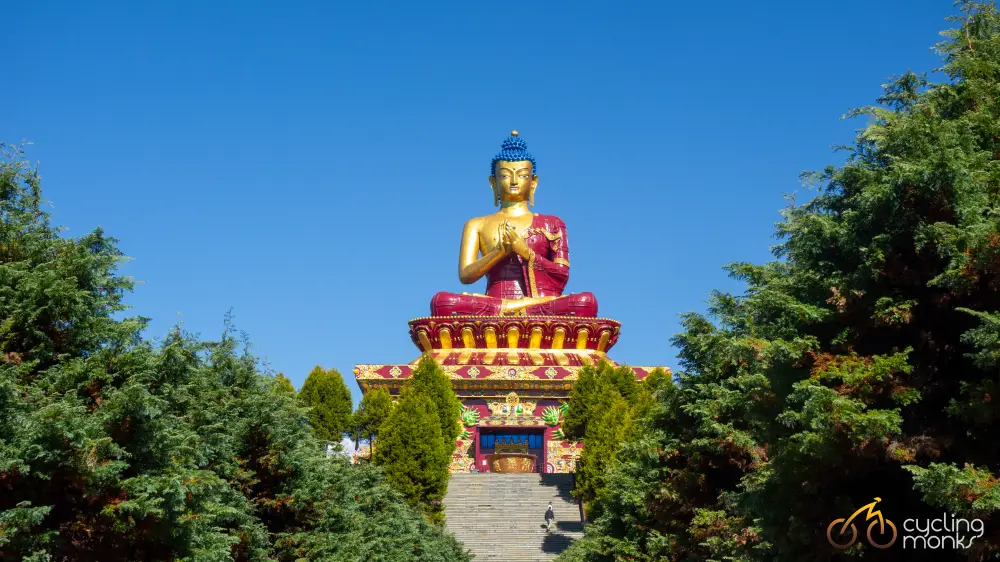
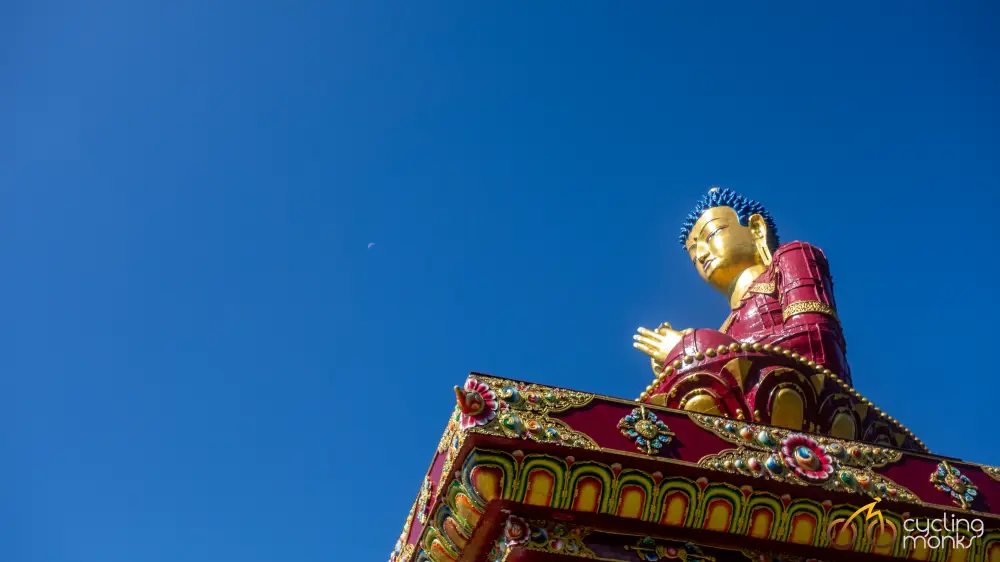
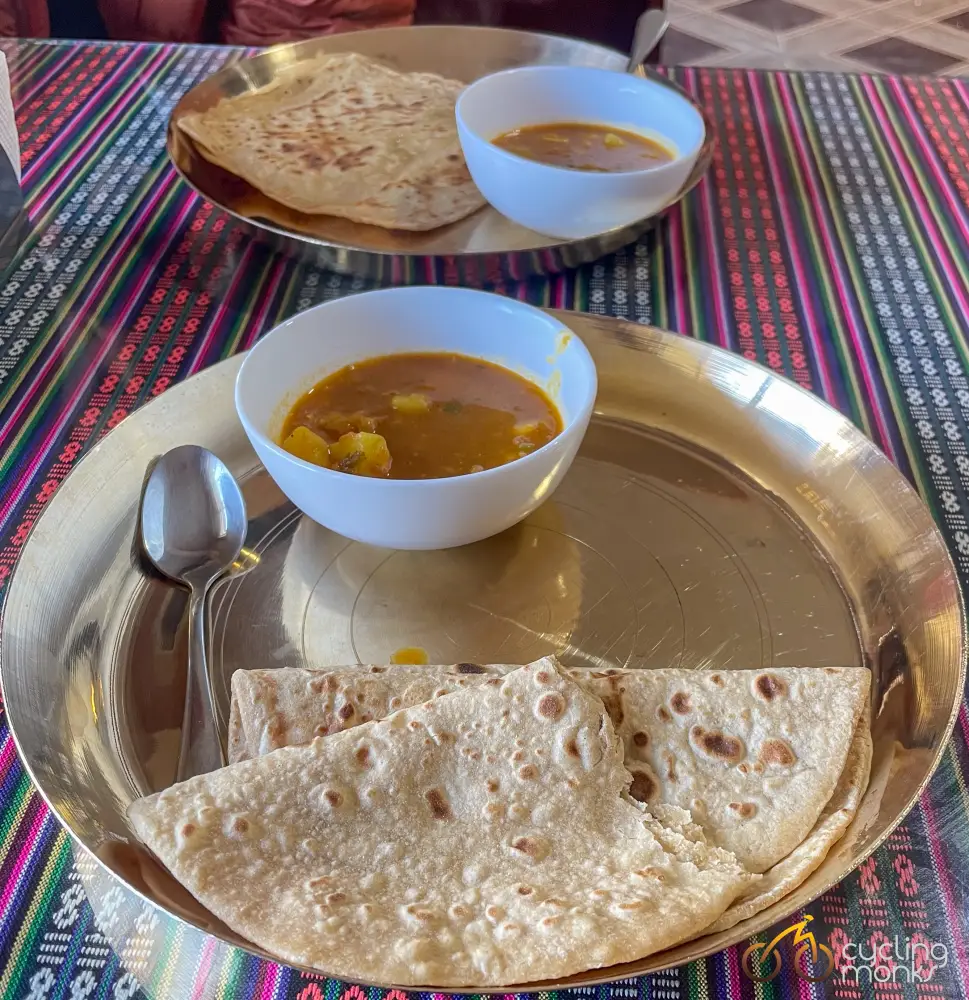
After a solid breakfast of roti-sabzi and plain parathas with egg bhurji, we took a short morning stroll over to Buddha Park (Tathagata Tsal). Built to commemorate the 2550th birth anniversary of Gautama Buddha, the complex is spotless, modern, and lined with intricate murals depicting Buddha’s life. However, it operates on its own peculiar logic. Despite sunrise happening around 5:30 AM and sunset by 4:30 PM, the gates open only at a leisurely 9 AM. UPI is conspicuous by its absence, and flying a drone will set you back a cool ₹2,000!
By the time we soaked in the views and packed up, it was pushing noon. Our hotel owner suggested taking a newer shortcut toward Tashiding, but a quick glance at the elevation profile, combined with Chaitra’s dubious brakes, convinced us to take the older route via Legship.
What Goes Up Must Come Down
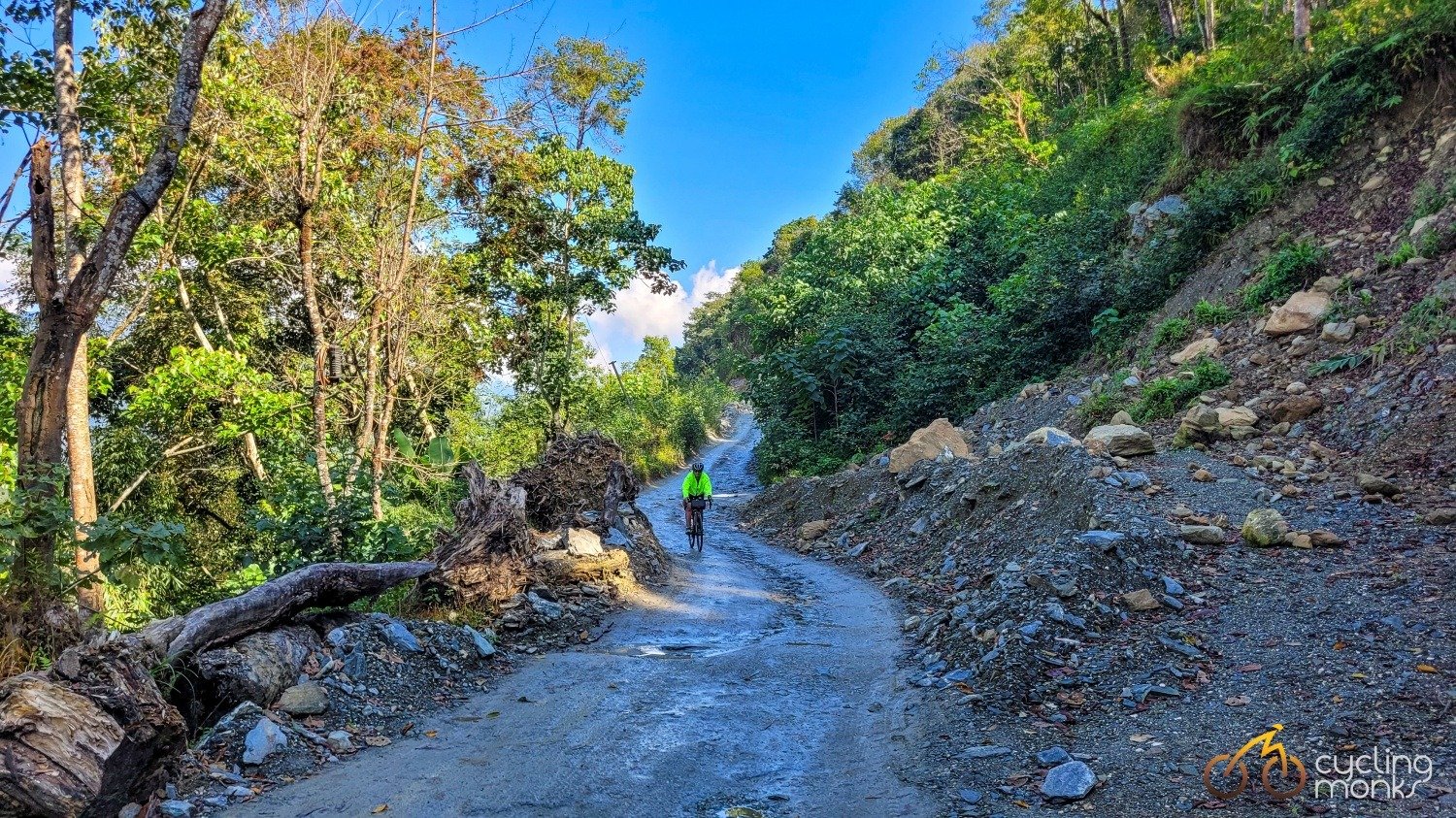
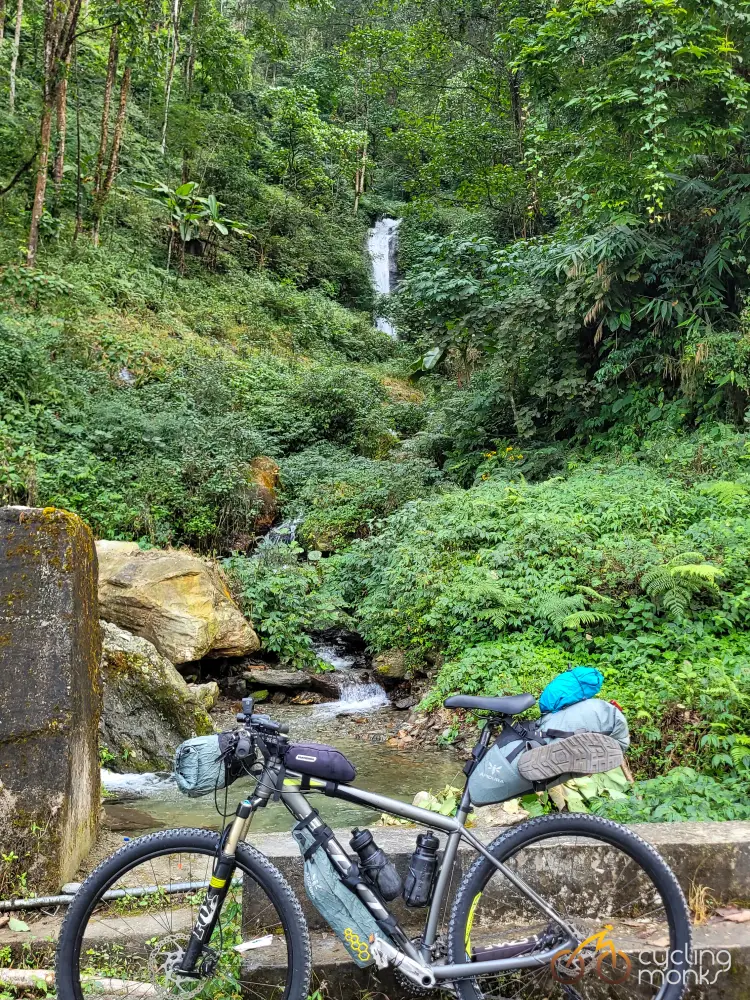
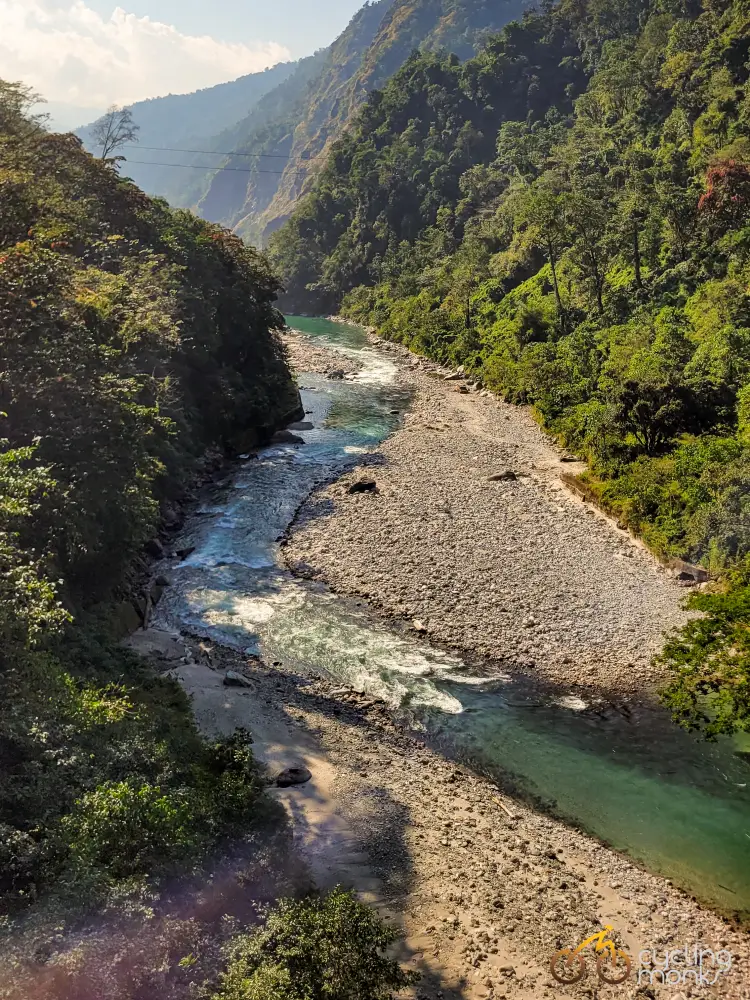
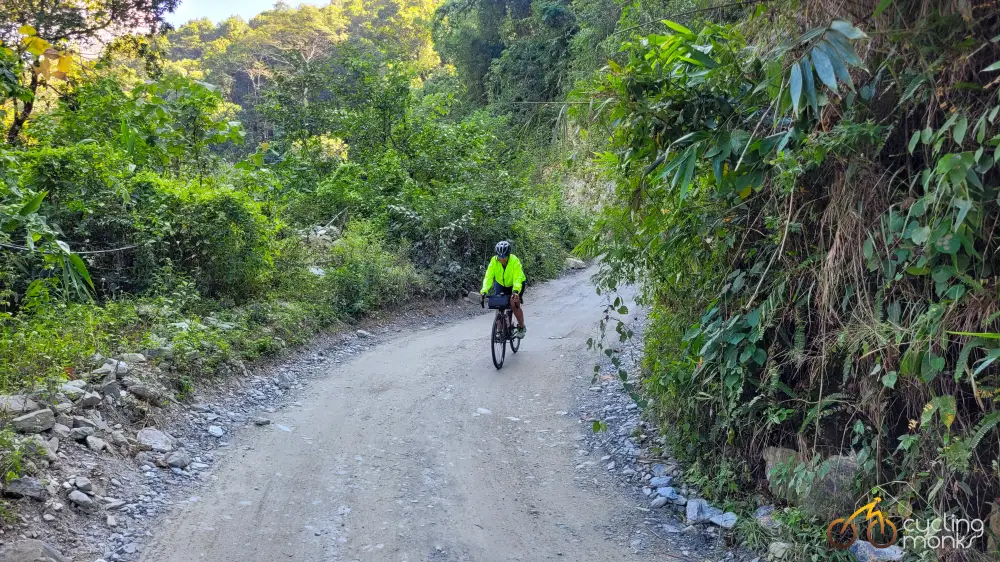
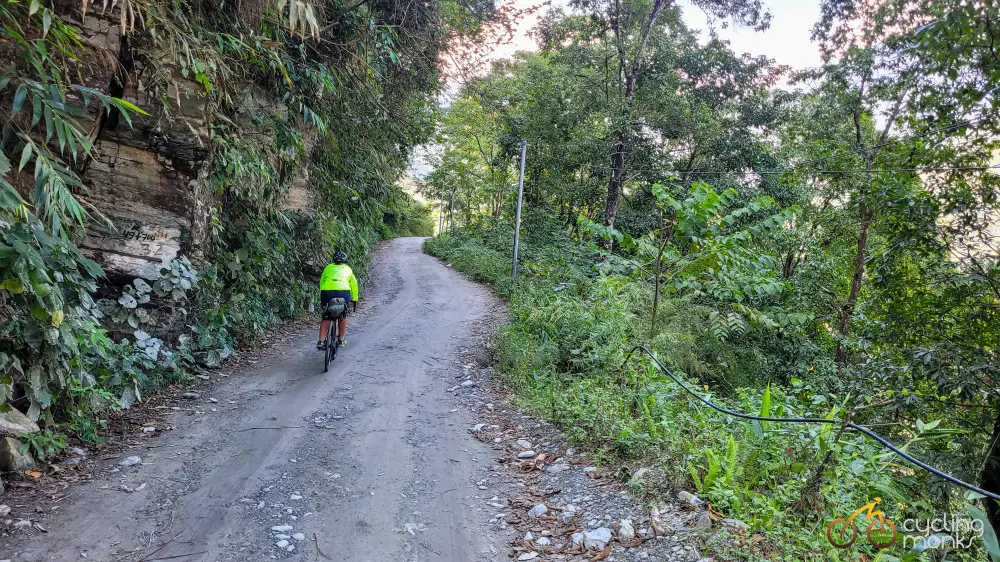
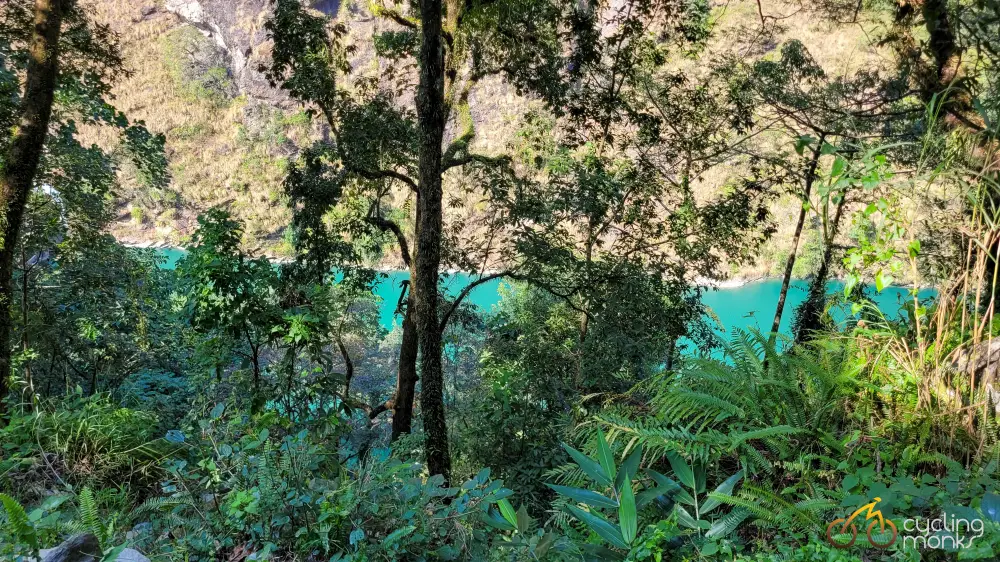
That turned out to be a classic case of out-of-the-frying-pan. Starting from nearly 2,000 metres in Ravangla, we plunged all the way down to 600 metres at the Rangeet River over 22 kilometres. The Legship road was less “highway” and more “boulder field,” adding an extra hour of bone-rattling descent before the tarmac finally smoothed out across the river.
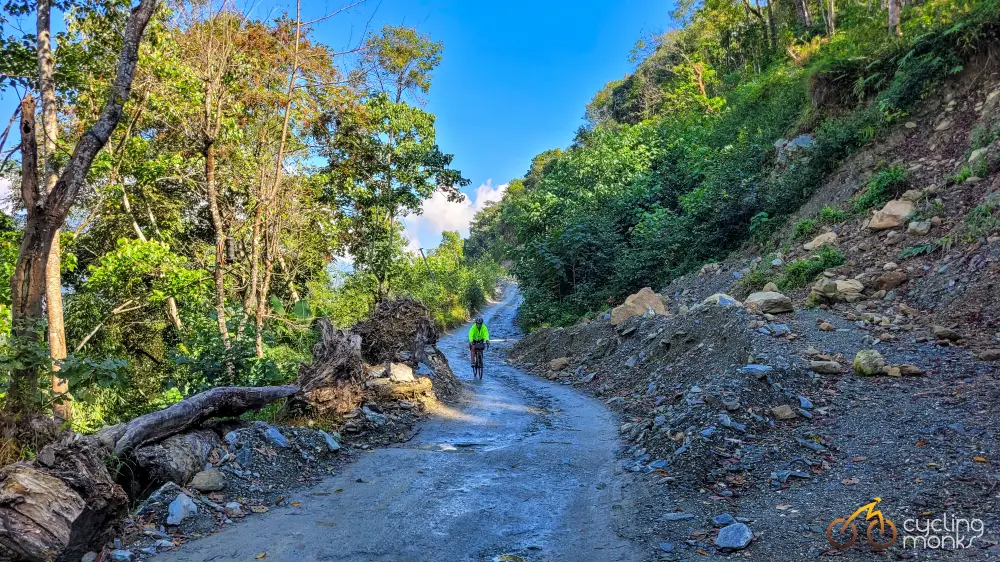
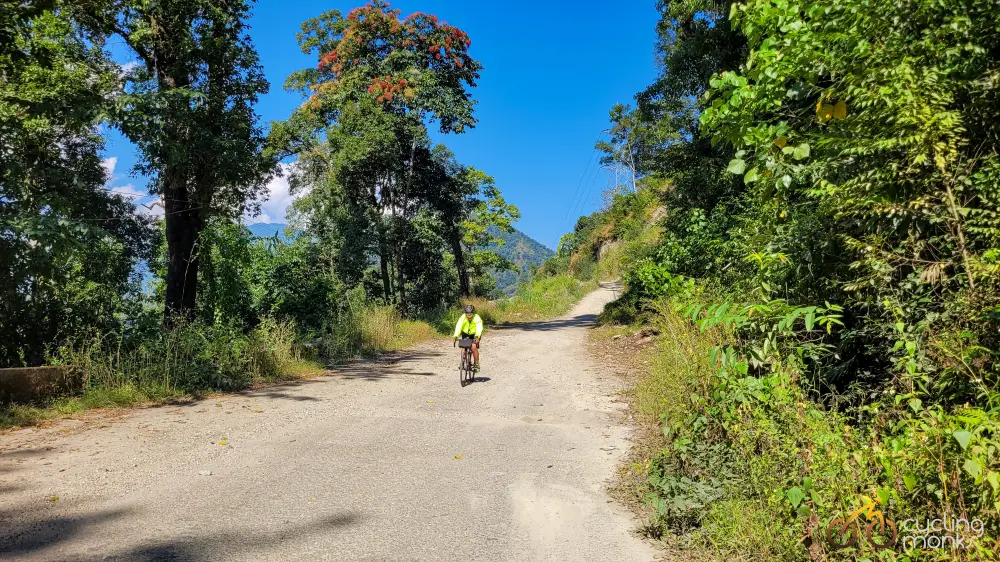
Naturally, crossing the river meant another punishing 10 km climb straight back up to 1,200 metres; packing nearly all of the day’s 590 metres of elevation gain into the final stretch. And, just to make things interesting, there were absolutely no eateries in sight.
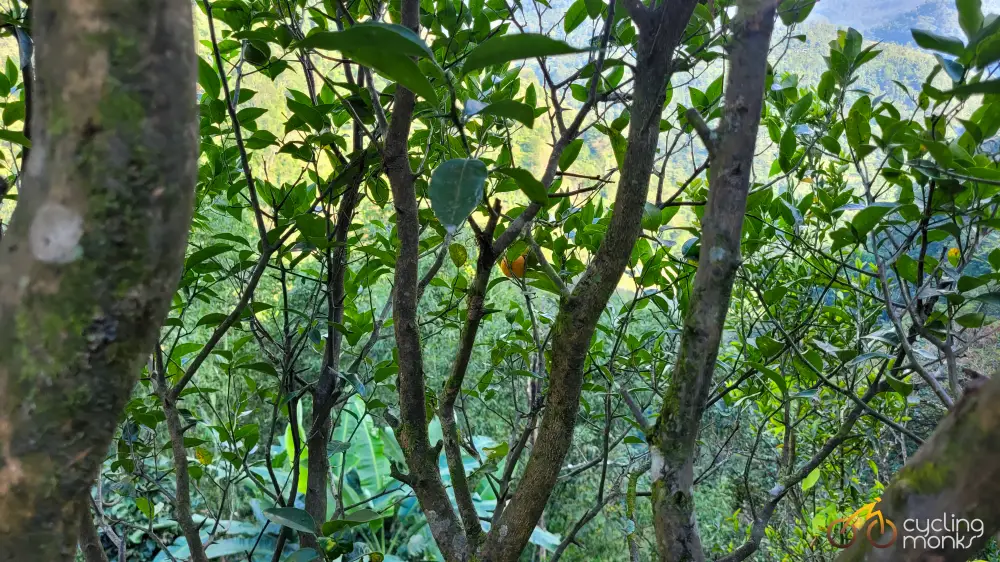
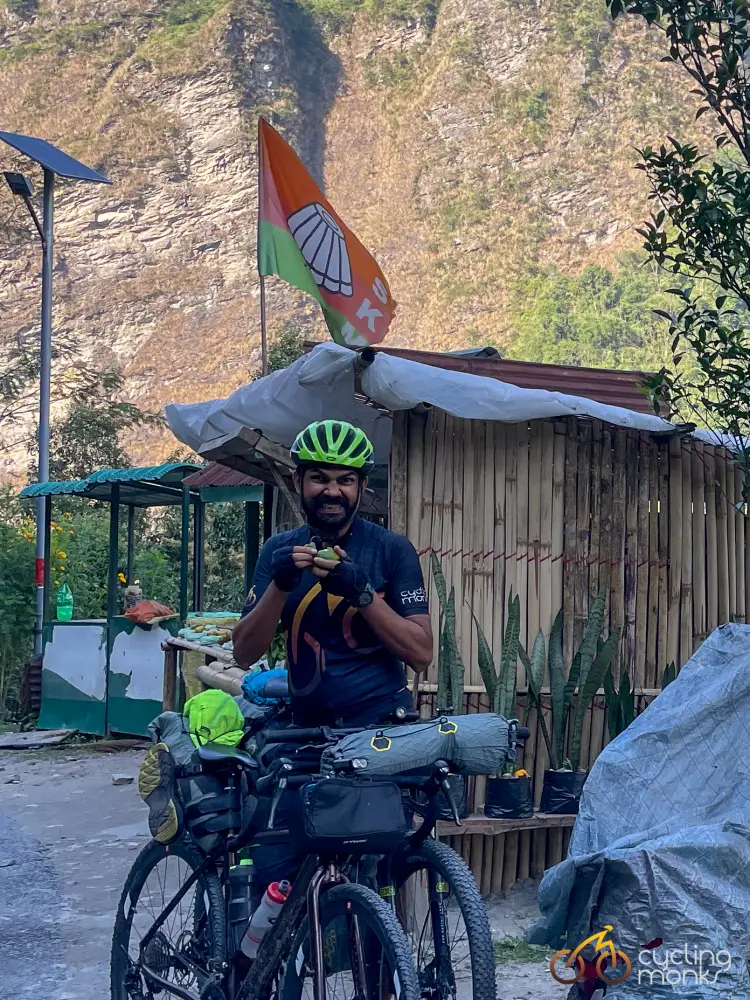
A kind gentleman on a scooter kept stopping ahead of us to scout for open shops. After few unsuccessful attempts, we ultimately survived on fresh, sweet Sikkimese oranges bought straight from a roadside orchard. Sometimes, the best energy bars come without packaging, nutritional labels or an exorbitant price tag!
Microsoft crashed and so did our plans…
Midway up the brutal gradient, while grinding at walking pace, Chaitra glanced down at her watch for a split second to check how much climb was left. That half-second of distraction was all it took for her front wheel to drift straight into a shallow roadside storm drain. Thankfully, she tipped over in slow motion auditioning for a Charlie Chaplin movie, bruising nothing more than her ego.
With the late start and sluggish descent, our original plan to reach Yuksom was out the window. Instead, we called it a day in Tashiding. We were completely oblivious at the time to the fact that Tashiding Monastery is considered one of the holiest Nyingma Buddhist sites in Sikkim. A lost opportunity if there ever was one. Sometimes, the gruelling roads decide what you get to see, and what you miss.
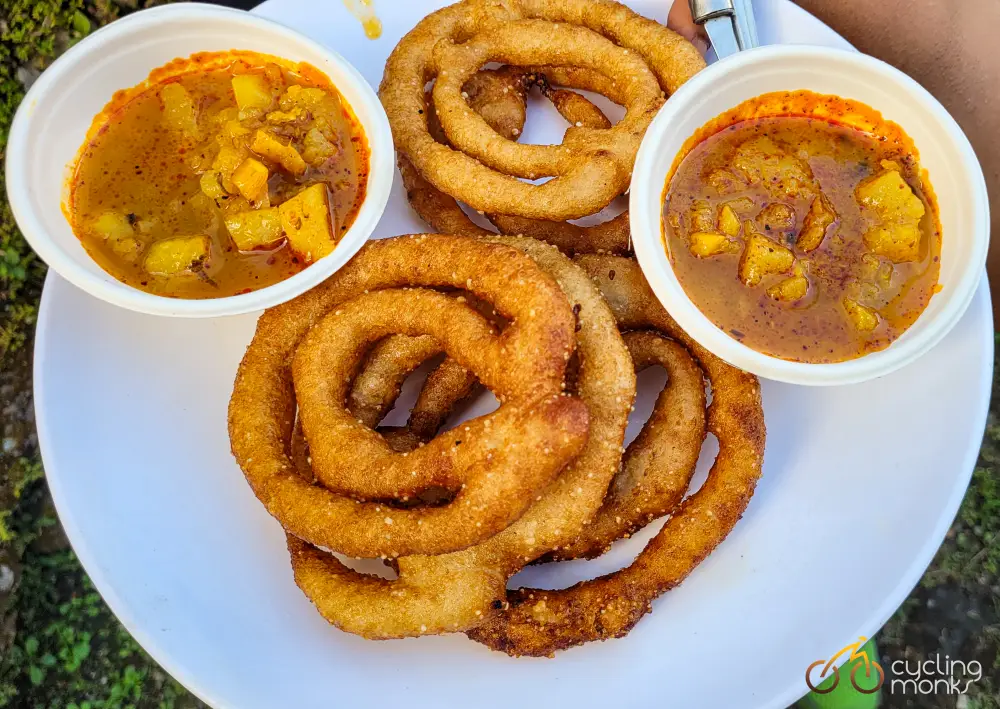
Before hunting for a bed, we refuelled at a roadside stall on Sel Roti. A traditional crispy, ring-shaped rice-flour doughnut, paired with spicy aloo sabzi. As we munched on these roadside snacks, we remembered the words of caution of a fellow cyclist, who warned us to eat only at ‘proper’ establishments.
Small Town Shutters
Finding a room in Tashiding proved a textbook lesson in ignoring Google Maps and other forms of technology. The lone hotel listed online wanted an astronomical sum for decidedly average rooms. We rolled 40 metres up the road and found an unlisted lodge for half the price; featuring a quirky local architectural standard where every room has separate beds. No Tinder to swipe here clearly!
By 6:30 PM, the entire town had rolled up its sidewalks for the night. We wandered around town finally returning to the restaurant beneath our lodge. The “fine” establishment carried the unmistakable aroma of a bustling local tavern. Not being interested in the spirit world we killed time with tea and hot pakoras until dinner was ready at 8 PM.
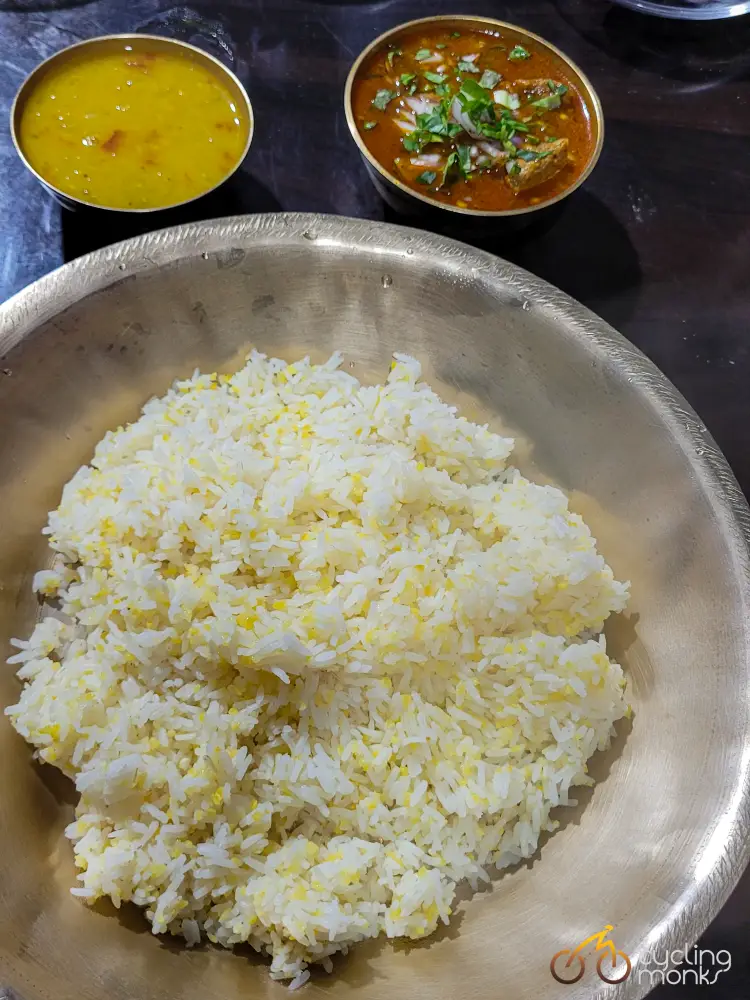
The wait was worth every second. We were served arguably the best veg and chicken thalis of the entire trip, complete with our very first taste of Churpi, a soft local paneer.
We also noticed buffalo meat on the menu, though the owner apologetically explained it was out of stock. He told us that, supplies traditionally arrive from Nepal via West Bengal, and recent political shifts across the state border had brought that trade to a halt.
A lovely dinner later we stocked up on biscuits for the next morning’s ride to Yuksom. We had already tasted hunger for breakfast and had no interest in seconds!
The rest of our Sikkim Sojourn will follow in the next few days…
Cycling in Sikkim: Route Planning
When I started searching for information about bicycle touring in Sikkim, I came up with nought. Most of the information I gleaned prior to the ride was by staring at Google Maps Street View and Strava Heat maps.
But even that was of limited help. This ride would have been difficult to execute without the help of Phuntshok Chopel from Hill Bike, Gangtok. A big thanks to him!
I am grateful to all those who helped me plan this ride; named in sequence of my consultations: Rohan Dewan, Yadav Bantawa, Avinash Pradhan, Phuntshok Chopel, and Dorjee Chopel. Without their advice this would have been difficult to pull off.
Cycling in Sikkim: FAQs for Fellow Bicycle Tourers
1. How tough is the terrain?
Think of Sikkim as a giant corrugated sheet turned sideways. I have ridden the Western Ghats, Nilgiris, Ladakh, Uttarakhand, Spiti, Himachal and then some more. No hill I have ever encountered has been as difficult as Western Sikkim’s hills!
2. When is the best time of year to cycle this route?
October to November (post-monsoon) and March to May (spring) are your golden windows. Our early-November ride gave us crisp, dry mornings around 20–25°C, though temperatures plummet the second the sun ducks behind a peak around 4:30 PM. Avoid the monsoon (June–September) due to landslides and washed-out roads.
3. Do Indian cyclists need permits for West Sikkim?
No. For East, South, and West Sikkim (covering Gangtok, Rumtek, Namchi, Ravangla, Tashiding, Pelling, and Yuksom), Indian citizens do not need any special permits. Just carry a valid government photo ID. Protected Area Permits (PAP) only kick in if you head north toward Lachen/Lachung or east toward Nathu La and the Old Silk Route. (Note: Foreign nationals do require a Restricted Area Permit/ILP for Sikkim, which can be sorted online via e-FRRO or at border checkposts.)
4. What is the food, water, and cash situation on the road?
- Timing is everything: Mountain towns wake up late and go to sleep early. Don’t expect breakfast at 6:30 AM. Always carry emergency bonk-rations (chocolates, nuts, electrolytes) because long stretches between river valleys have zero shops.
- Cash is still king: While most of the place is digitally covered, do keep some cash handy.
5. How are the accommodation options?
Most towns of Sikkim have plenty of accommodation options. You can reach the town and book on the spot or online, after you have physically seen the property. AI has made hotel images look much better online than the facilities in real life.
6. How do you get your bicycle to Gangtok?
Fly into Bagdogra (IXB) or take a train to New Jalpaiguri (NJP), and hire a local cab for the ~5-hour drive up to Gangtok. We couriered our bikes to Hill Bikes. They also rent out good quality MTBs which actually will work out cheaper for a 10–12 day ride!
7. What exact bicycle, drivetrain (gearing), and tyre width did you ride on this trip?
We rode a Scott Scale 940 MTB which was stock and a Kona Rove gravel bike with a 46-30 crank, 165mm crank arms and a 10-speed climbing cassette. Tyres were 35 mm gravel tyres.
8. How did you pack your bicycles from Bangalore to Bagdogra, and where did you store the boxes while riding?
The bikes were packed in cardboard boxes by us in Bangalore and shipped to Gangtok. Our boxes got wet in the rain, so Phuntshok helpfully provided us fresh boxes. But it is a small town, with few bikes being sold, so one can’t count on getting a bike box there.
9. How is the traffic and driver etiquette in Sikkim, do local taxi drivers give cyclists room on narrow mountain roads?
Traffic is amazing, we barely had any bad experiences with vehicles on the tight, steep and narrow roads. Only outsider driven vehicles from Bengal or beyond are a little risky as they don’t know the terrain.
10. How is mobile network and internet connectivity along the interior stretches?
Vodafone and Airtel worked in all the towns. In between there were some places where it was not working. The Telecom Service providers are scamming people! The phone shows 5G, but the internet is as slow as 2G!!!
11. What is the drinking water situation?
Wherever we have ridden in India, we only fill up water from the dhabas in our cycle bottles. Never have we used bottled water, same was the case in Sikkim. Whatever is good enough for the locals is good enough for us.
12. What clothing and layering system did you pack to handle 25°C–30°C sunny climbs followed by sudden sunset temperature drops?
Most of our riding was done in shorts and tees. For the descents we would pull out our rain jackets. Fortunately, we did not get rain, else temperatures could really plummet.
13. Are there stray dogs or wildlife to watch out for while climbing at slow speeds?
There are a lot of dogs in Sikkim. Like a lot. But the dogs are the most well behaved I have ever seen in India. In our entire trip, probably two dogs chased after us. Every vehicle has written on it, “Be kind to animals”. And the animals know that and are kind to humans as well. The chicks are loitering near cats, while kittens are playing near dogs. And all of them are at peace! We didn’t encounter any kind of wildlife.
14. What was your rough daily budget per person for accommodation, food, and permits/entry fees?
Our total expenditure worked out to around 50k per person for 15 days, including flights, courier, accommodation, food and every other single thing. This was neither a shoestring budget ride, nor an extravagant ride. Accommodation is reasonable, food is comparatively expensive.
Also read our bikepacking travelogues from Uttarakhand and Meghalaya…