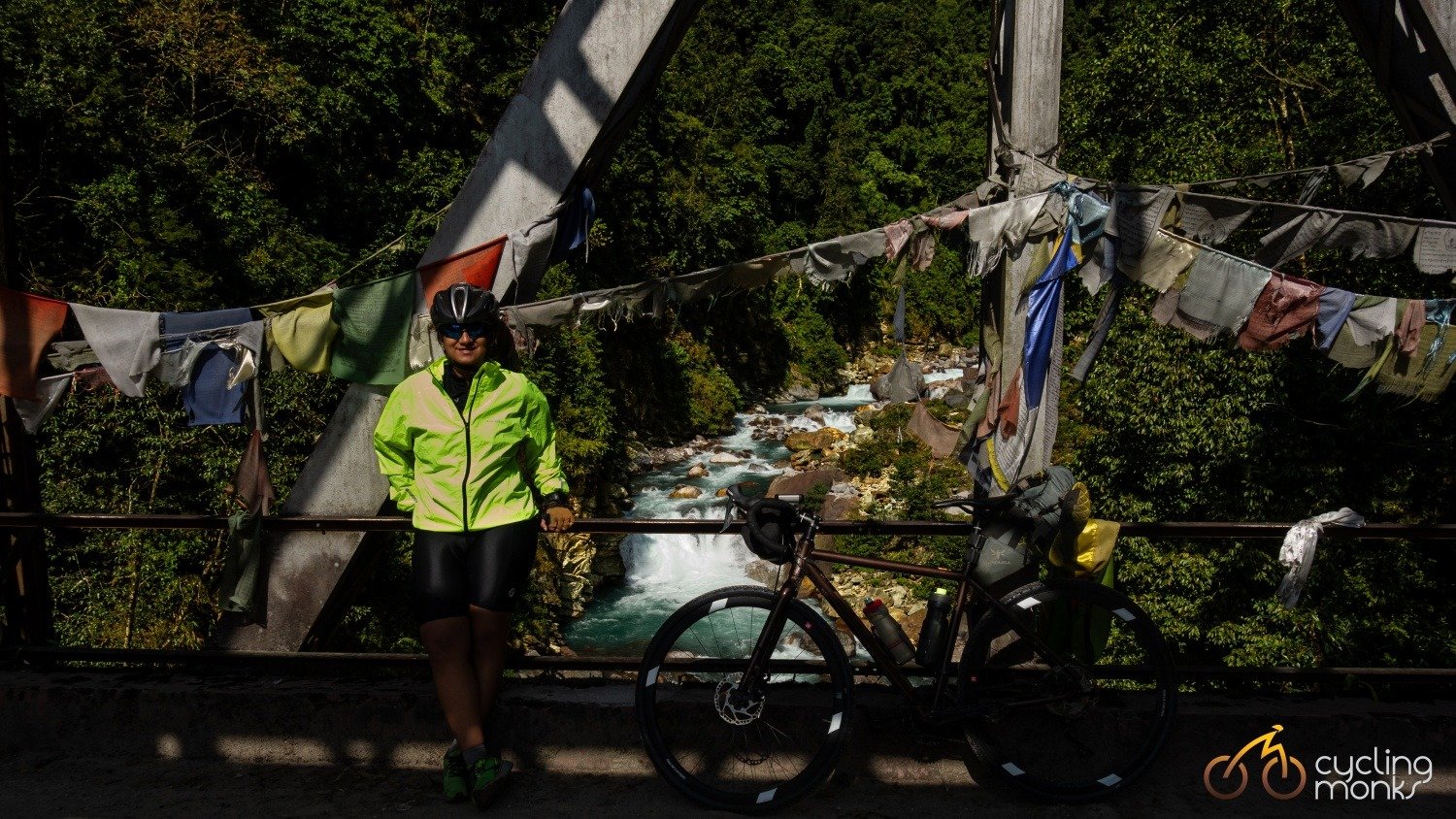
Cycling to Yuksom, the ancient capital of Sikkim and then to the tourist town of Pelling in West Sikkim. This is the second instalment of our Sikkim bikepacking trilogy.
You can read the first part of the trilogy here: Cycling in Sikkim: A Himalayan Exercise in Suffering
“Where are you going?”
“To Pelling”
“Why are you going to Pelling? There is nothing there.”
An eight-year-old schoolboy, walking eight kilometres home from school, had just dropped a truth bomb on Chaitra. He was right, in a way!
Having survived the vertical initiation of Gangtok, Rumtek and Ravangla in Part 1, Chaitra and I spent the middle leg of our Sikkim bikepacking odyssey trading arterial roads for moss-covered trails, fermented millet beer, dying brakes and a tourist skywalk that made us question humanity’s architectural priorities.
Day 4: Cycling to Yuksom: Shortcuts, Coronation Thrones, and Tongba
Knowing full well that mountain towns treat mornings like a rumour, we hadn’t left breakfast to chance. Armed with biscuits and chocolates bought the previous evening, we munched our way out of the village, while everything around us remained firmly shuttered.
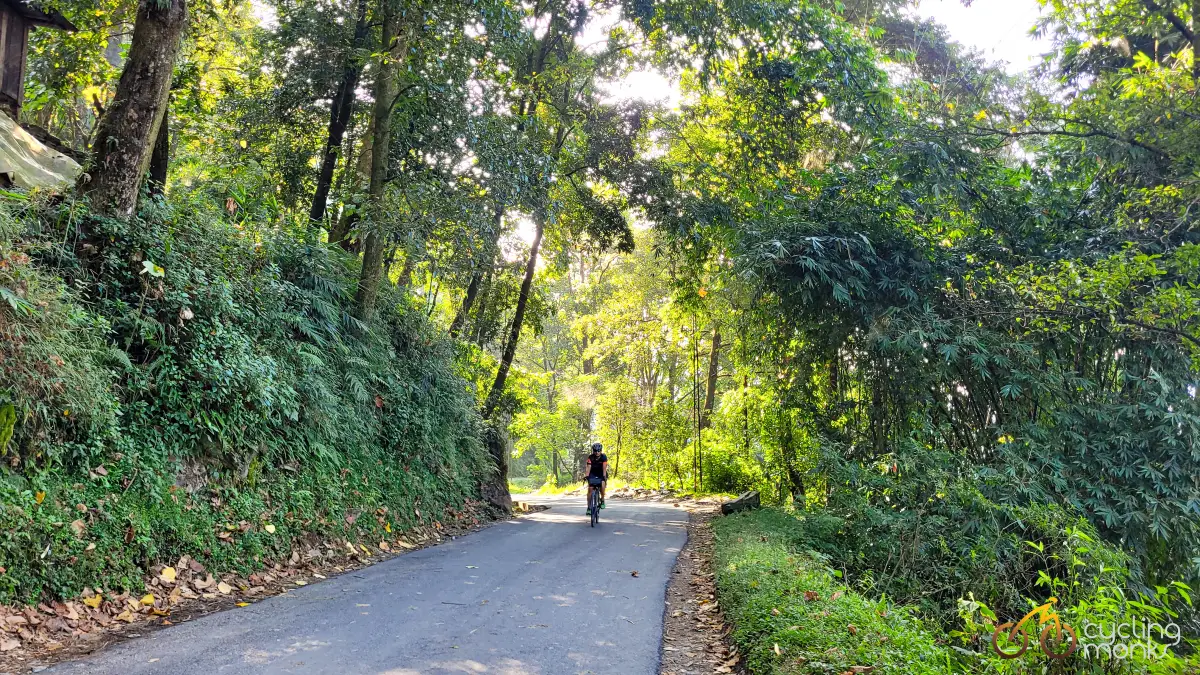
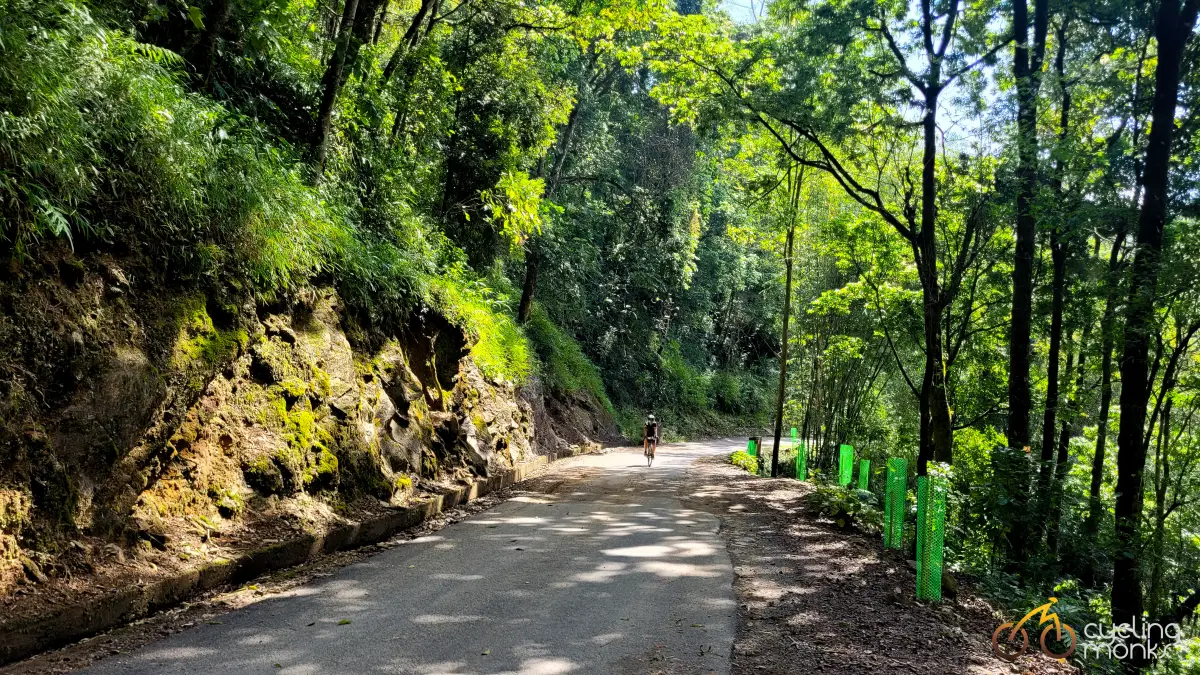
The road tilted upwards almost immediately, plunging into thick, silent forest cover. We climbed from roughly 1,250 metres to past the 1,600-metre mark in the first five kilometres alone. With no eateries or homestays along this stretch, we patted ourselves on the back for the excellent decision of having stopped in Tashiding the previous night. Pushing on to Yuksom in the dark would have been pure madness.
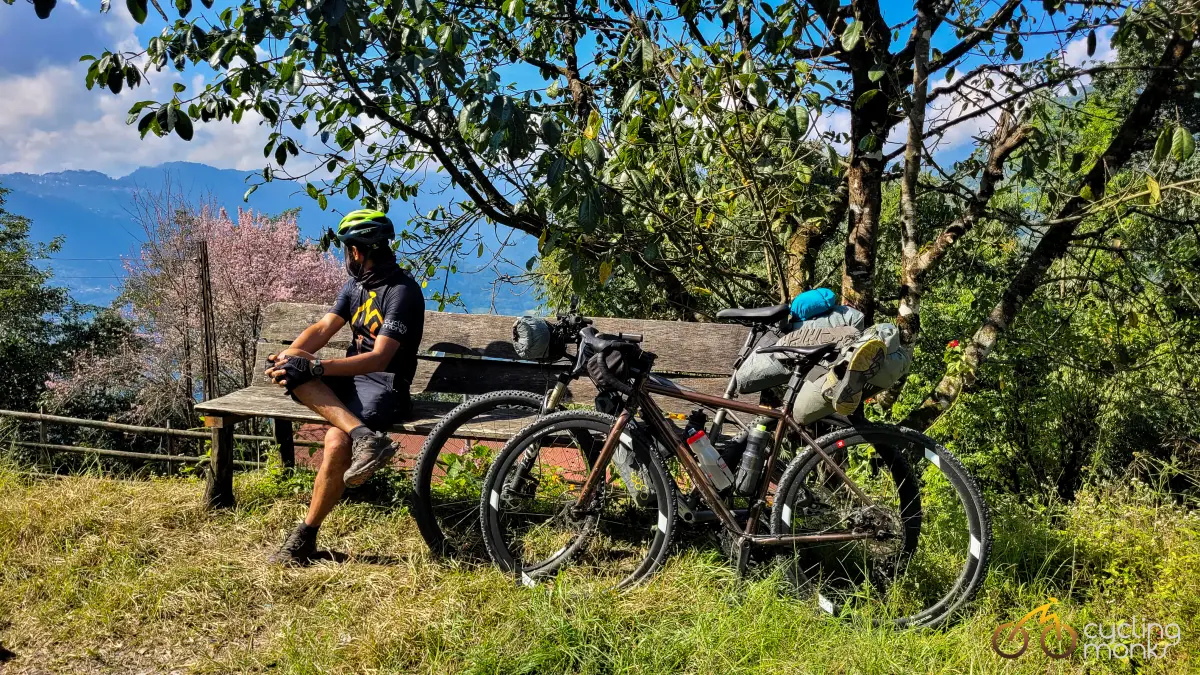
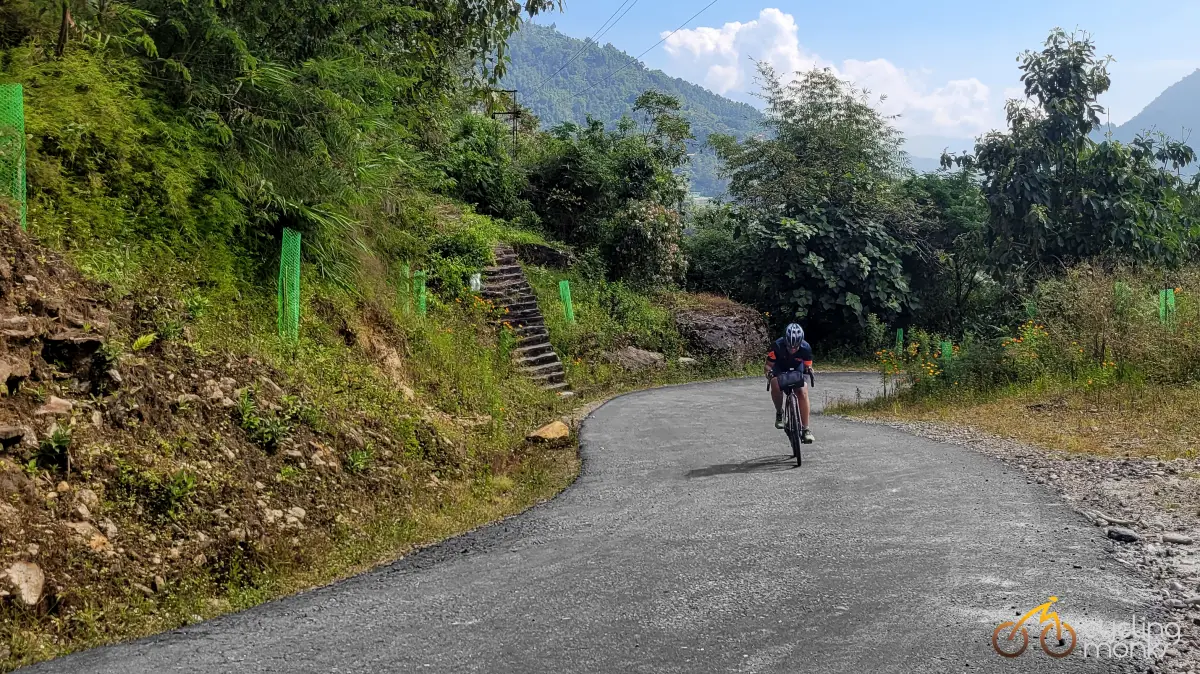
As we ground our way through a quiet hillside village, we found ourselves in an involuntary race with three local schoolkids. Every time we laboured around a long, sweeping hairpin bend, the kids would take a vertical shortcut straight up the hillside and casually pop out on the road ahead of us, grinning at our glacial pace. Clearly, we were missing a trick.
Food… At Last!
Salvation eventually arrived in the form of a tiny roadside dhaba, where we stopped for steaming noodles. While we waited, one school kid asked if I wanted to eat “Goa”. Before I could explain that a beach holiday wasn’t quite on the menu, her friend corrected her: “Guava.” Mystery solved. But I wondered whether to be delighted about the child’s generosity or horrified that she pitied us cyclists to the extent that she did.
The dhaba owner proudly told us that her daughter had studied in Sikkim and was now working as an engineer in Pune. Another lady told us that the road ahead was ‘flat’. We scoffed at the idea, and so she took us by the arm and pointed towards the road in the distance, which was indeed going downhill. Surprisingly, she was right!
From Dust We Come to Dirt Roads We Go!
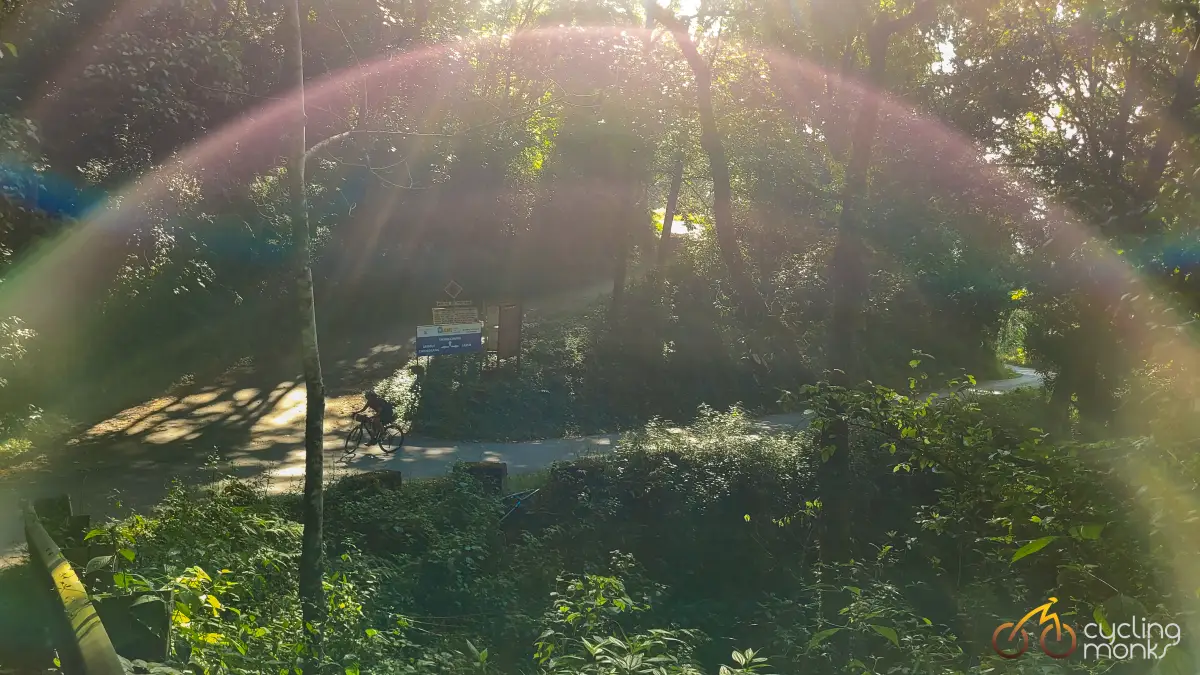
As we closed in on Yuksom, the tarmac gave up the ghost. The final stretch, climbing past 1,750 metres, turned into a bone-rattling slog over mud and loose gravel. Yuksom itself is a tiny, charming hamlet, and the first thing we did was pedal over to see its famous “lake”, which was ever so slightly bigger than a pond.
With Chaitra battling a nasty cold and fever since the previous night, we decided to ditch the budget hunting and splurge on a night at Tashigang Retreat. The old property was impeccably maintained and managed by Sudhir from Kalimpong, who spends four months a year running the retreat while also operating his own adventure travel company.
History in the Hills: Yuksom
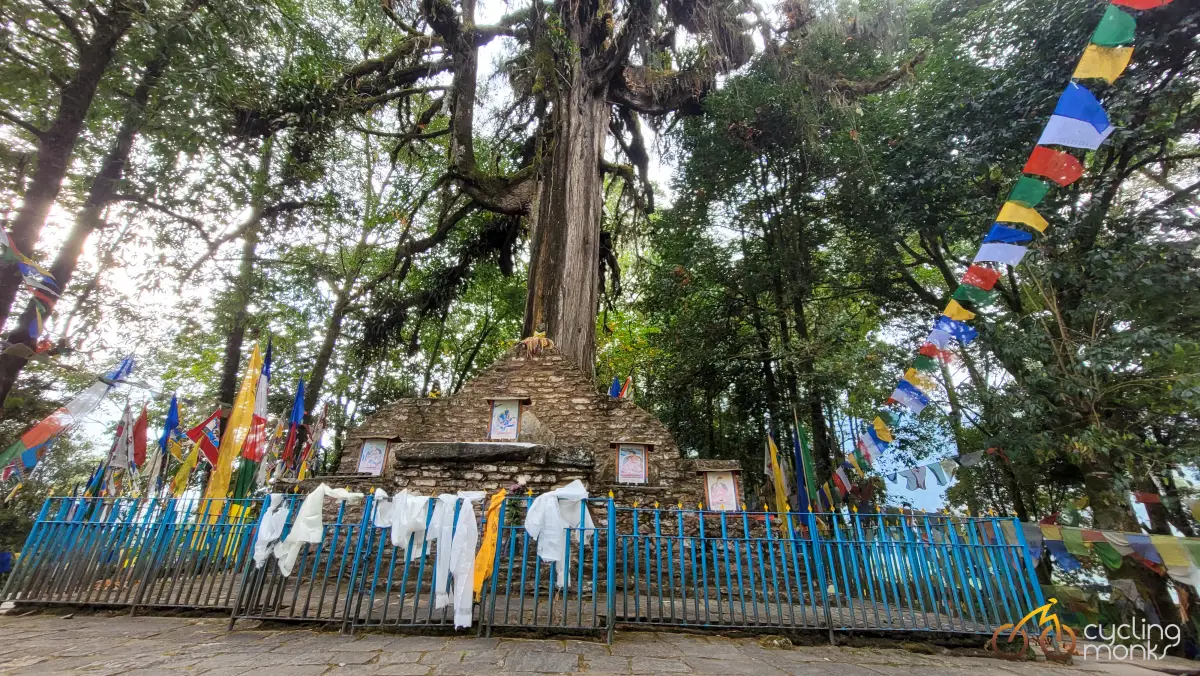
Yuksom, literally meaning “the meeting place of three learned lamas”, was the very first capital of the Kingdom of Sikkim. In 1642, three revered Tibetan monks consecrated Phuntsog Namgyal as the first Chogyal (king) here, on the stone Norbugang Coronation Throne. The Namgyal dynasty went on to rule Sikkim, until 1975, and its lineage is still respected as royalty across the state.
Determined to squeeze every drop out of the shrinking daylight, we set off on foot, racking up nearly 10 kilometres of walking on top of our 20-kilometre ride. Our first stop was to see the ‘Origins’ of Sikkim, the Norbugang Coronation Throne, shaded by a towering ancient pine, where a week-long Buddhist festival puja was underway.
Dubdi Monastery: The First of Sikkim
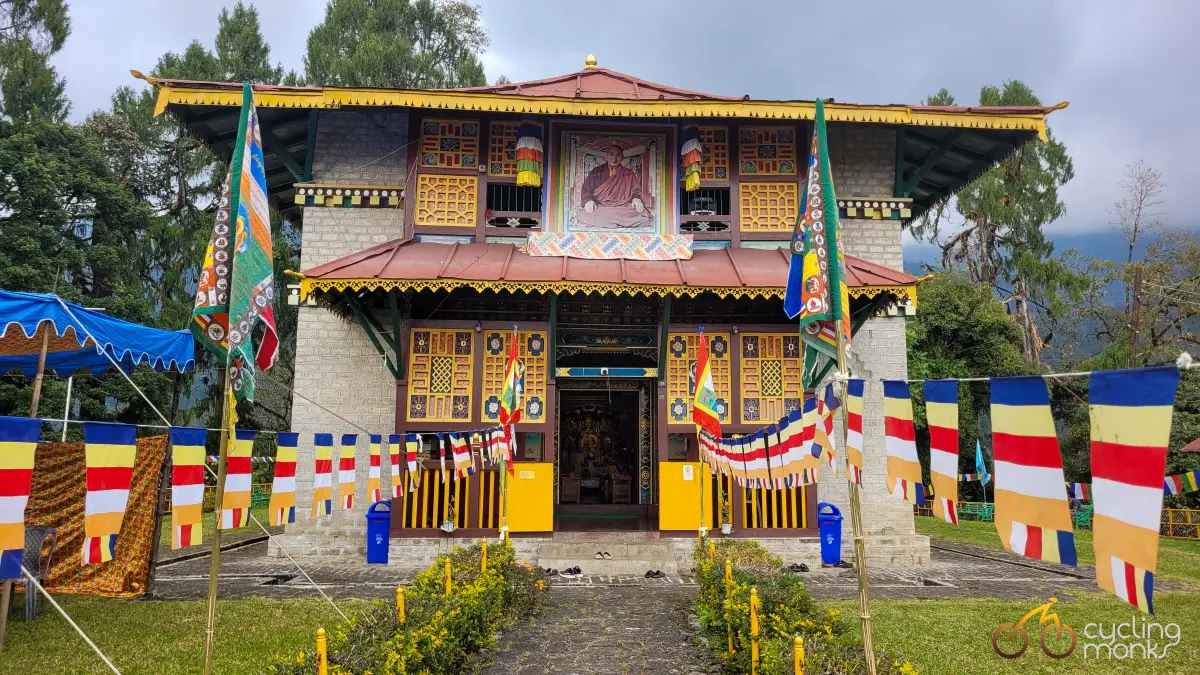
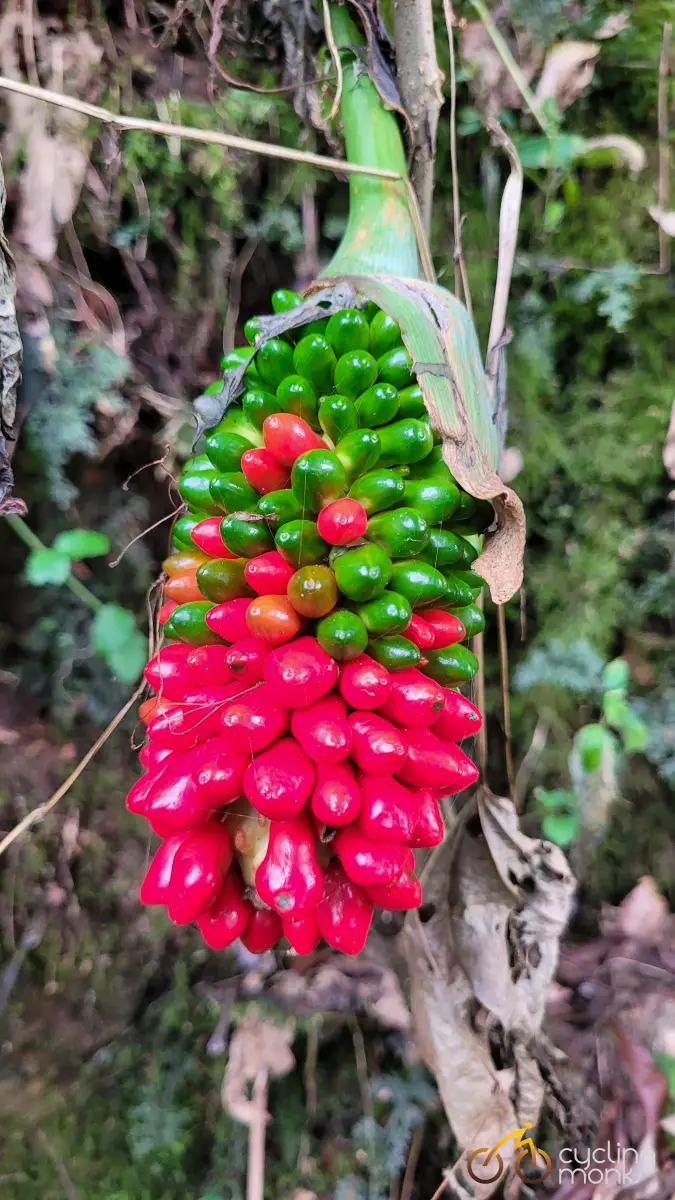
From there, we began the long hike up to Dubdi Monastery, perched at 2,100 metres and widely revered as the oldest monastery in Sikkim, built in 1701. The forested trail was a lovely change of pace after the morning’s ride. Along the way, we passed an elderly lady and her grandson harvesting Indrani fruit from a tree roughly 20 feet high. I looked with awe as the kid fearlessly jumped from branch to branch, casually hacking at the fruit with a sickle in hand.
The final approach to Dubdi was slick with green moss, leading us to a tiny, stone gompa. We chatted with a resident lama about the ongoing puja and the monastery’s three-century history. He told us with a wry smile that few people attended the puja at the monastery, because the walk up was too steep. Most preferred going to the Coronation Throne for the puja, as it was accessible by vehicle.
We’ll Get By With A Lil Help From Our Friends
On the way down, a young man who had spotted us pedalling earlier in the day recognised us and kindly offered a lift back to town. In a moment of pure cyclist stubbornness, we declined. Sometimes, the need to prove a point to absolutely nobody gets the better of you.
On our walk back, we caught up with the same grandmother and grandson, now struggling under massive stacks of leaves and a heavy sack of harvested fruit. We offered to carry the sack down for them, leaving them thoroughly amused that two random outsiders were willingly volunteering for manual labour. They couldn’t stop giggling as they watched us carry the sack. I suspect we might have featured in their dinner-table conversation later that night.
Big Mountains and Good Food
Along the ridge, we spotted a massive statue gleaming on a distant hill. It was only days later that we realised we had been looking straight across the valley at Pelling. It is sometimes unnerving to spend hours and days travelling from one point to another, only to look back and realise how close the two places appear from across a valley. All that physical effort seems to pale into insignificance when confronted with the scale of the mountains.
Wrapping up our walk, we took a shortcut past the Sikkim Tourist Information Office, thoughtfully tucked away at the far edge of town where no tourist would ever stumble across it. Unsurprisingly, it was locked tight. One does wonder what the point of a tourist information office is if tourists can’t find it, or get in.
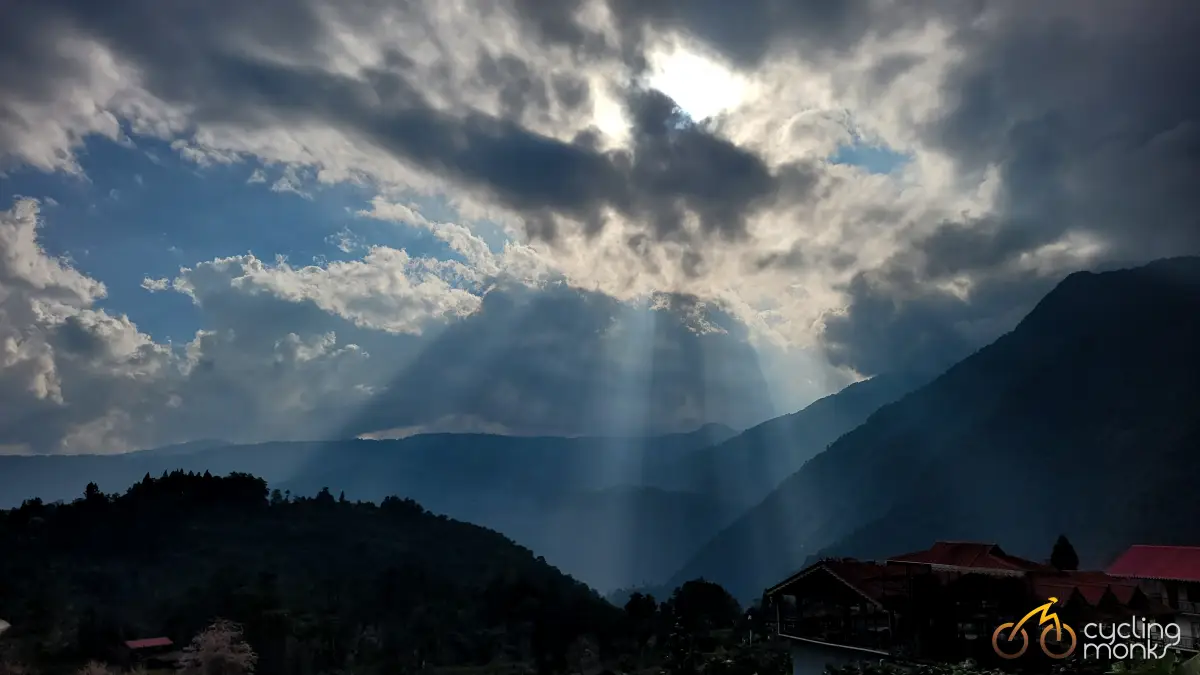
Back in Yuksom, we stopped for tea alongside a group of young boys from Madhya Pradesh and Chhattisgarh, pooling their coins to scrape together ₹50 for a single shared plate of momos. It reminded us of our school and college days, where we would do the same to enjoy a mouthwatering treat. It was not the food which was memorable, but the camaraderie when you only have lint in your pockets!
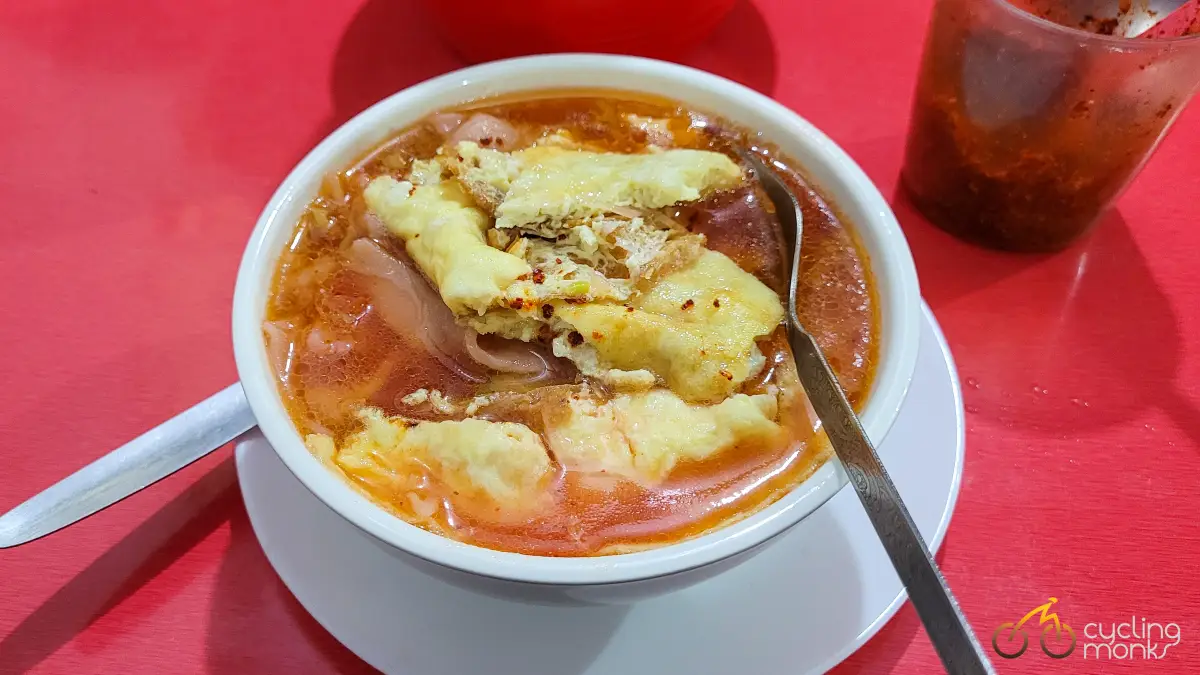
On Sudhir’s recommendation, we headed to Traditional Inn for dinner, where I staged a proper Sikkimese culinary exploration: rhododendron wine, Tongba, Egg Thentuk and Pork Ema Datshi. The Ema Datshi was a tad watered down, but the Tongba was a revelation.
What is Tongba?
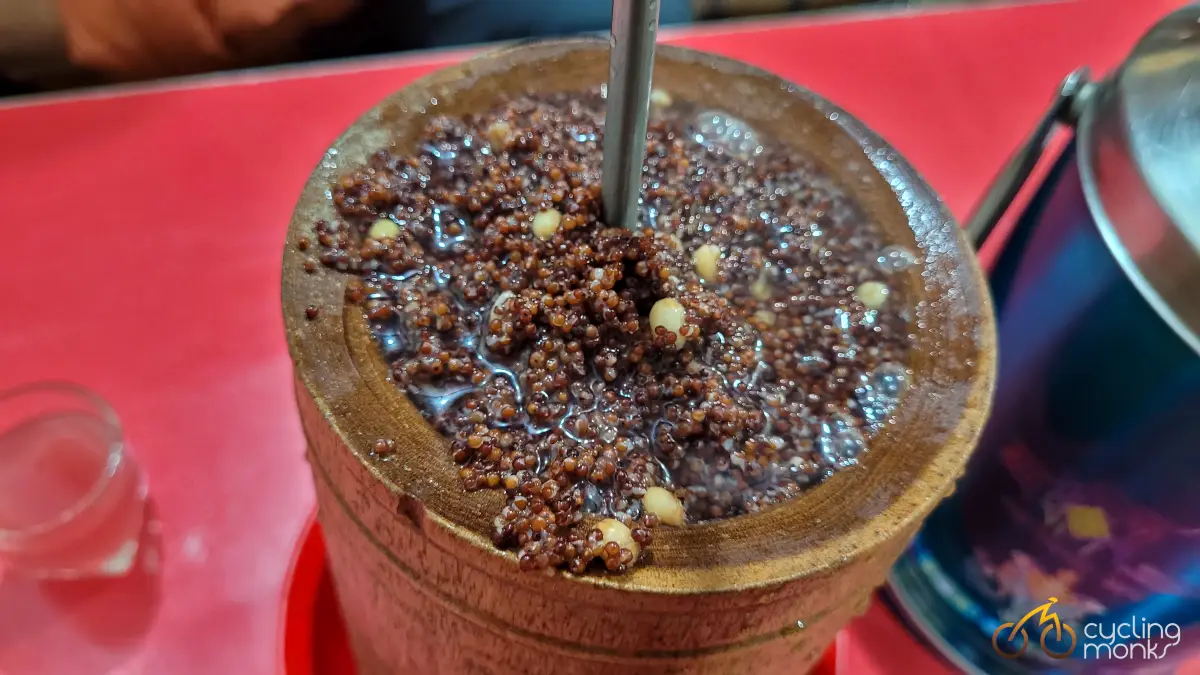
A traditional drink of the Limbu people of eastern Nepal and Sikkim, Tongba is made by fermenting whole-grain finger millet (kodo) inside a tall bamboo vessel. You sip the warm, mildly alcoholic, nutty brew through a straw with a perforated base. As the drink runs low, you top up the vessel with boiling water, repeating the process several times until the millet finally loses its punch. Needless to say, by the time the millet had lost its punch, we were punching out for the day.
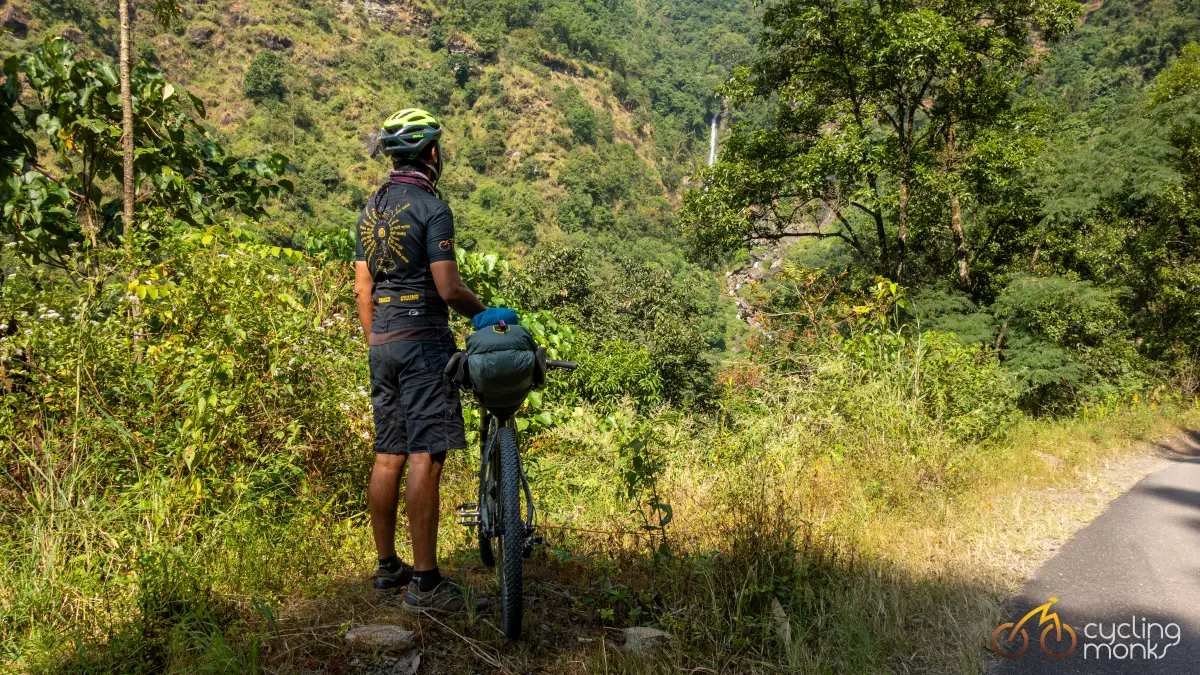
Day 5: Yuksom to Pelling: Dying Brakes, Landslides, and a Persistent Mongrel
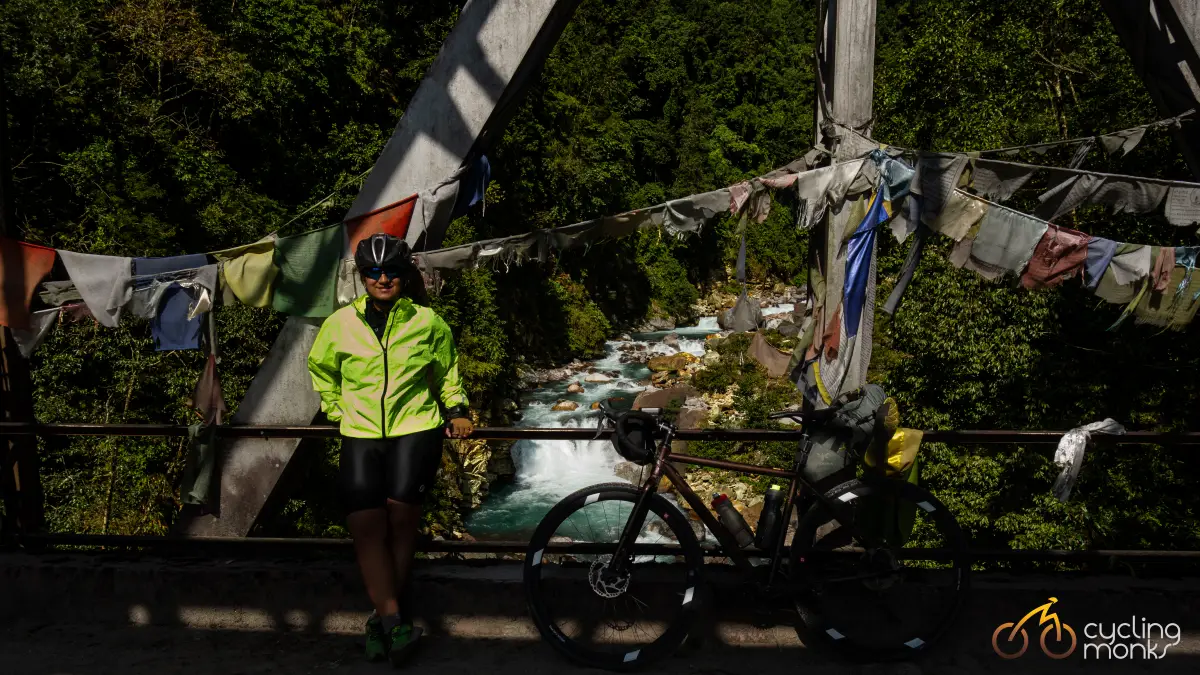
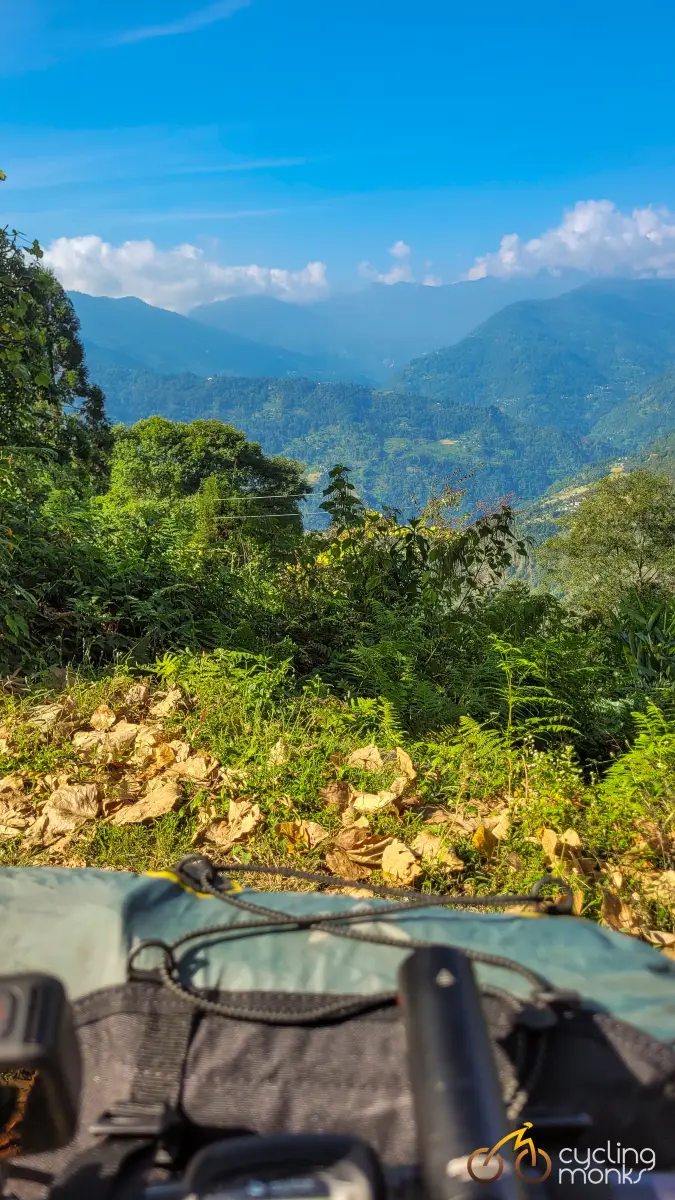
We woke to crisp morning air and serene views of the surrounding hills, and lingered over breakfast at the retreat. Sudhir treated us to an impromptu masterclass on the interconnected history and geography of Sikkim, Nepal and the Darjeeling hills. It was one of those conversations that makes you realise just how much history lies beneath the landscape you are riding through. Every cultural interaction, gorgeous vista and gastronomic delight becomes ever more meaningful when you know the history behind it.
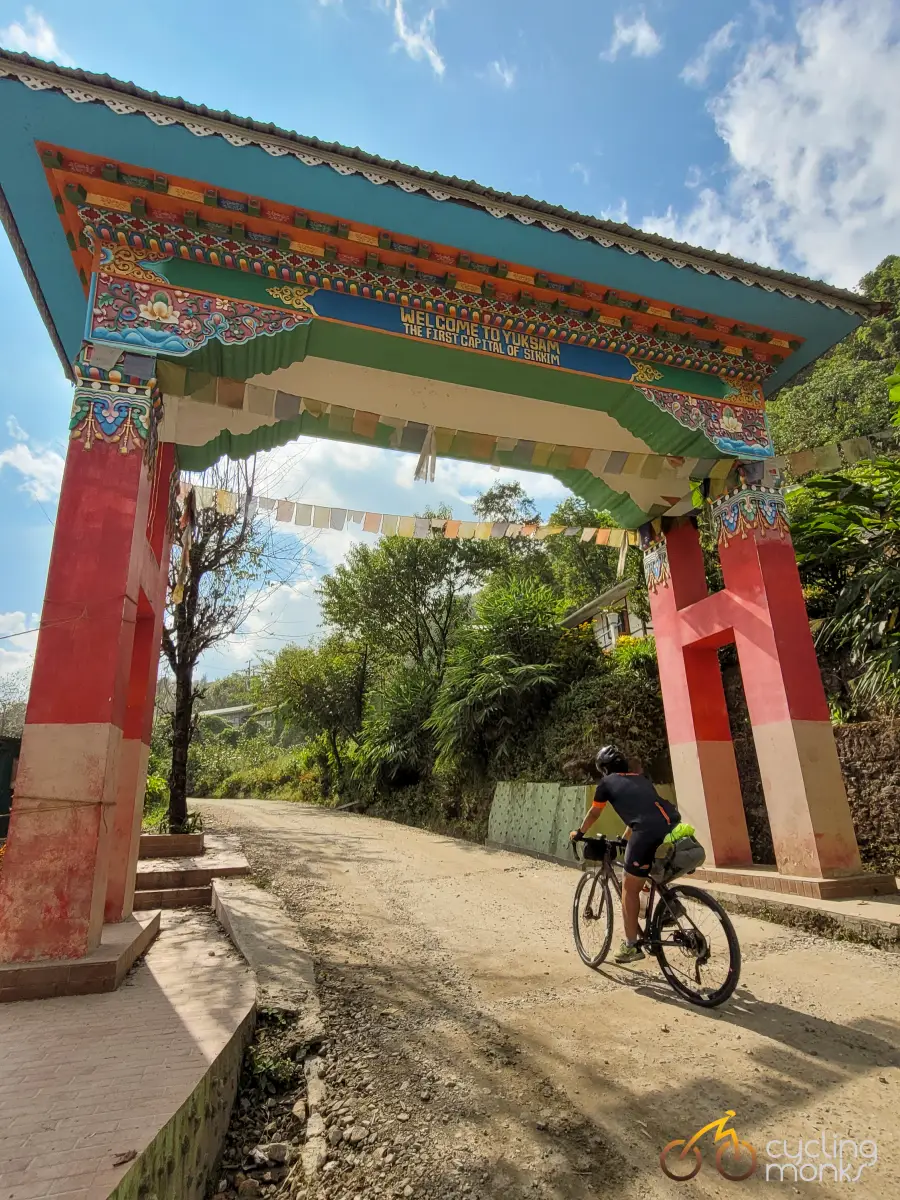
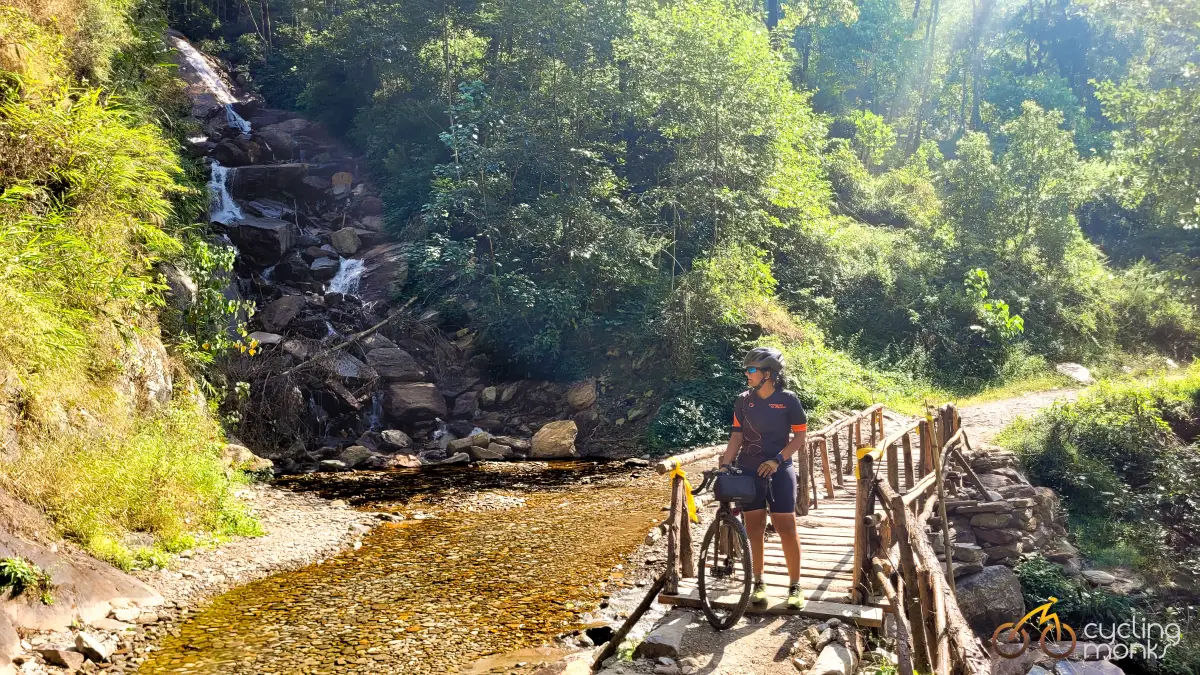
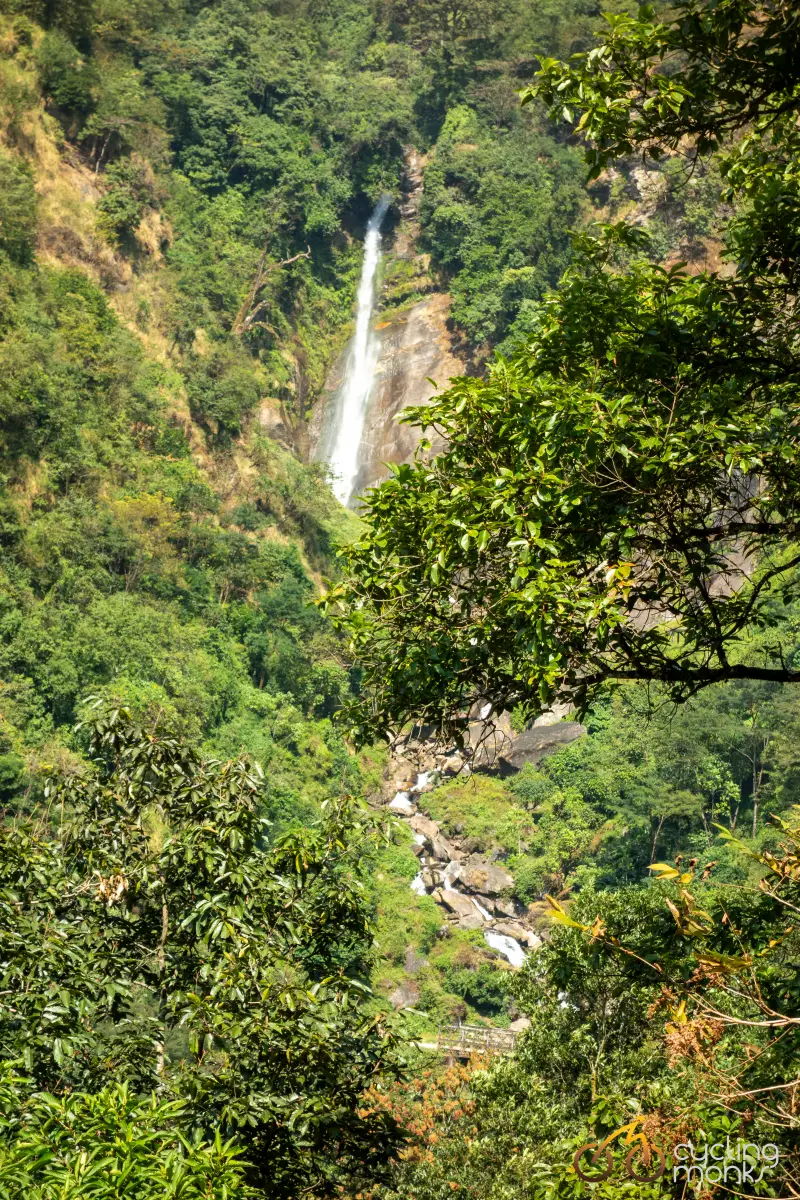
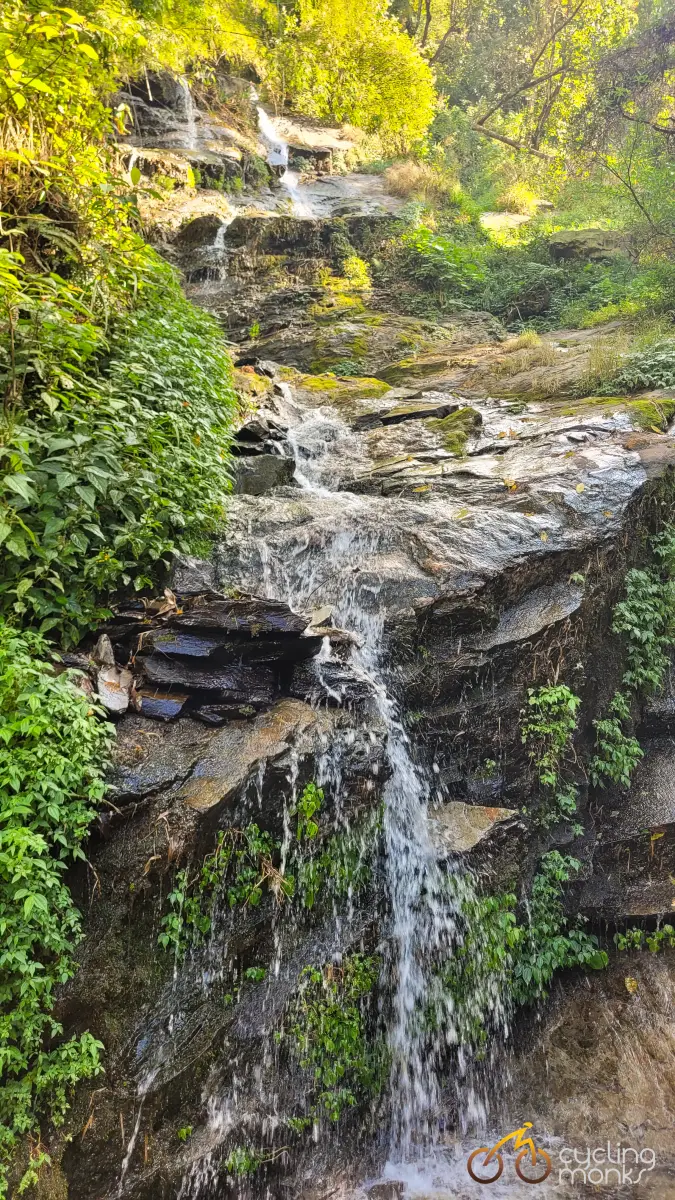
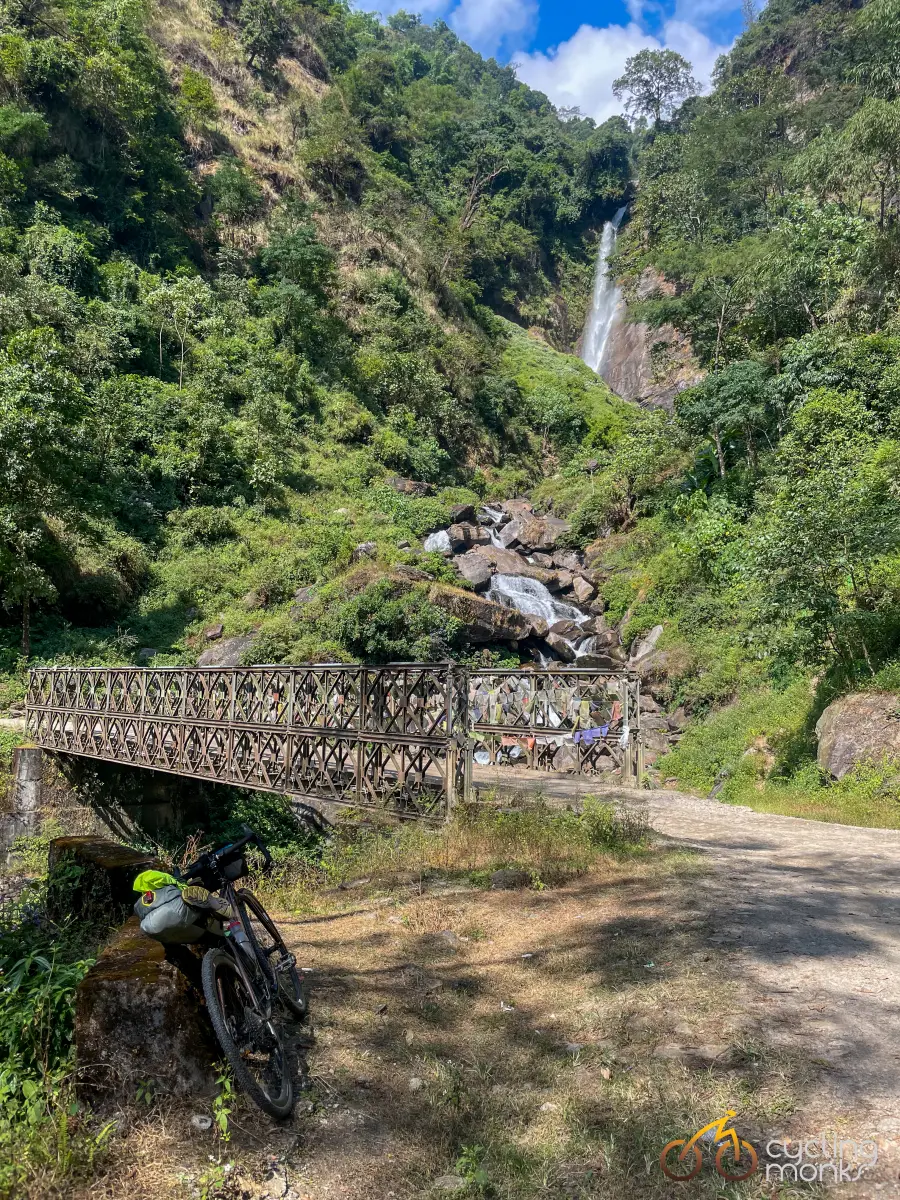
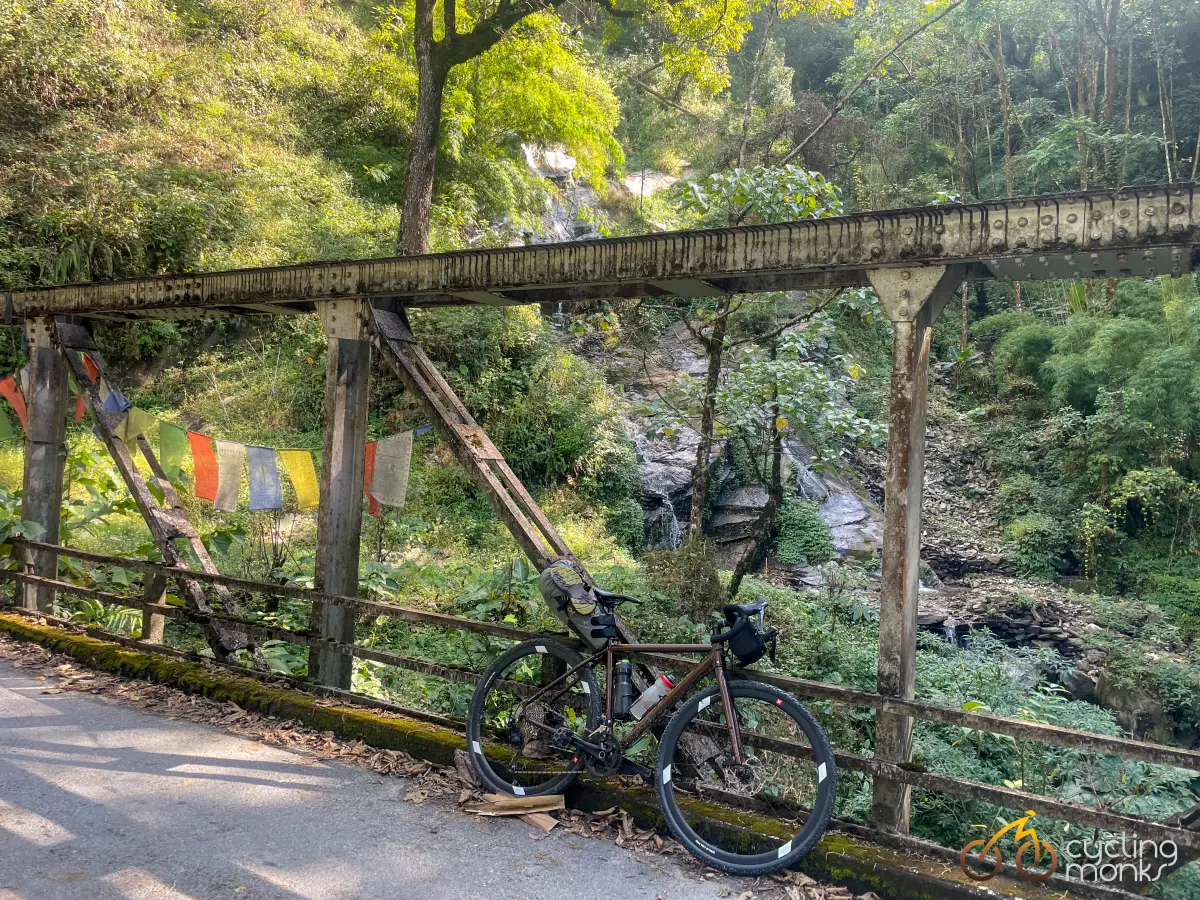
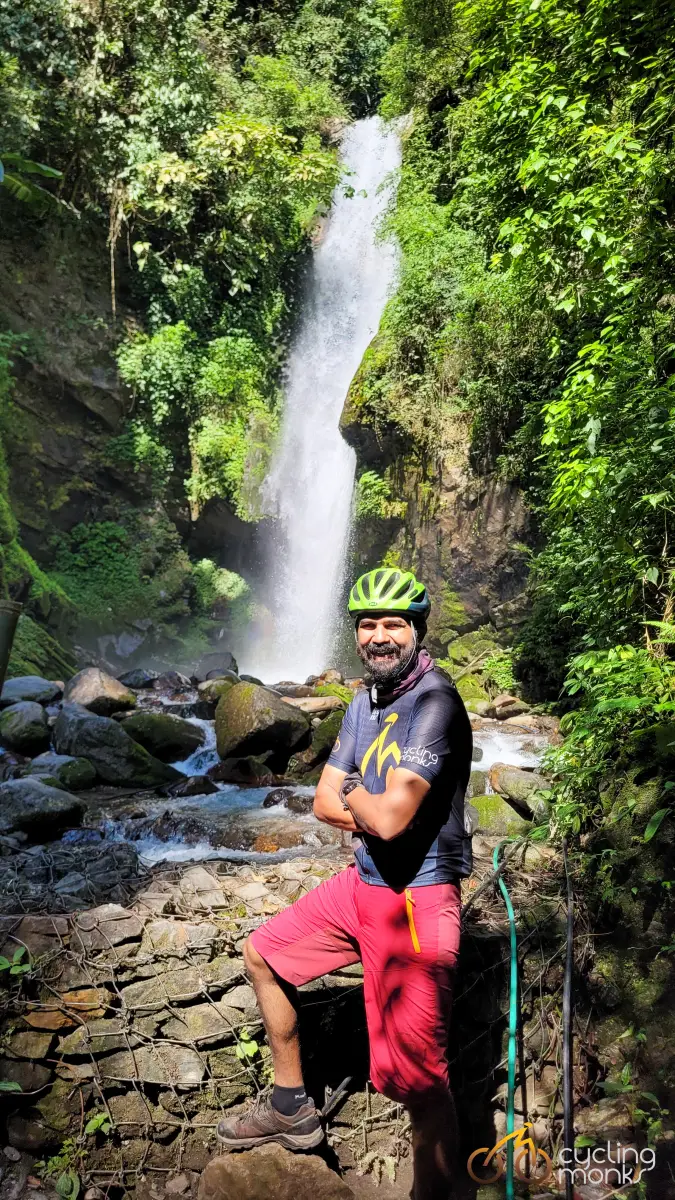
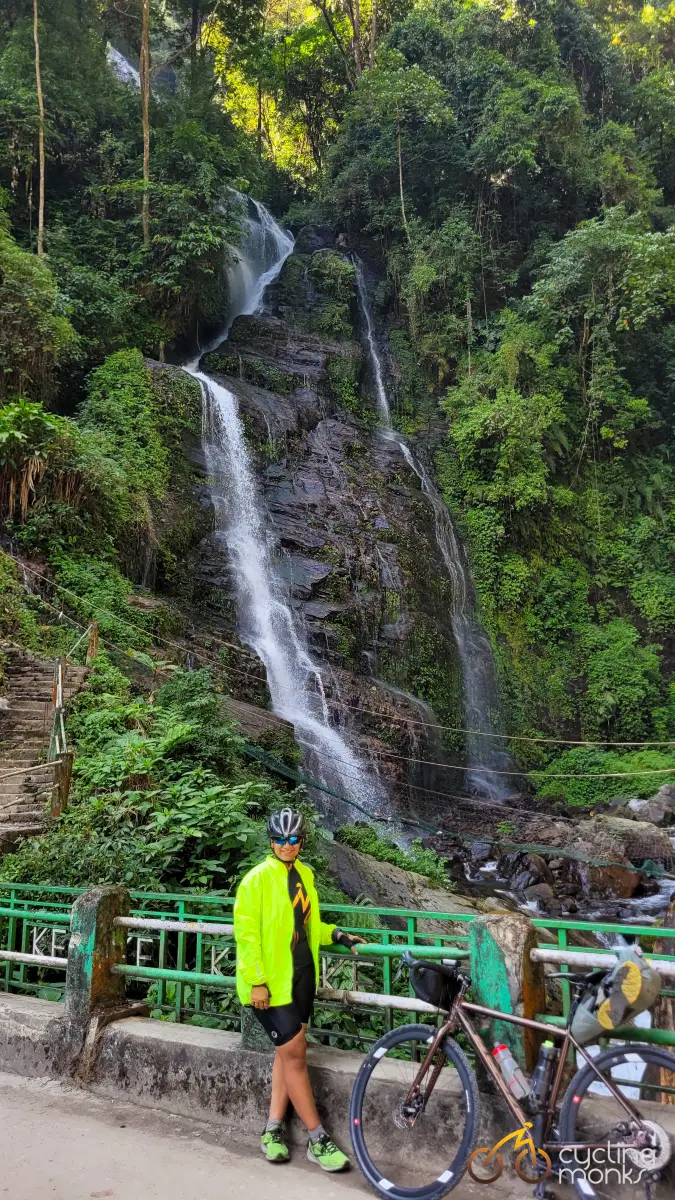
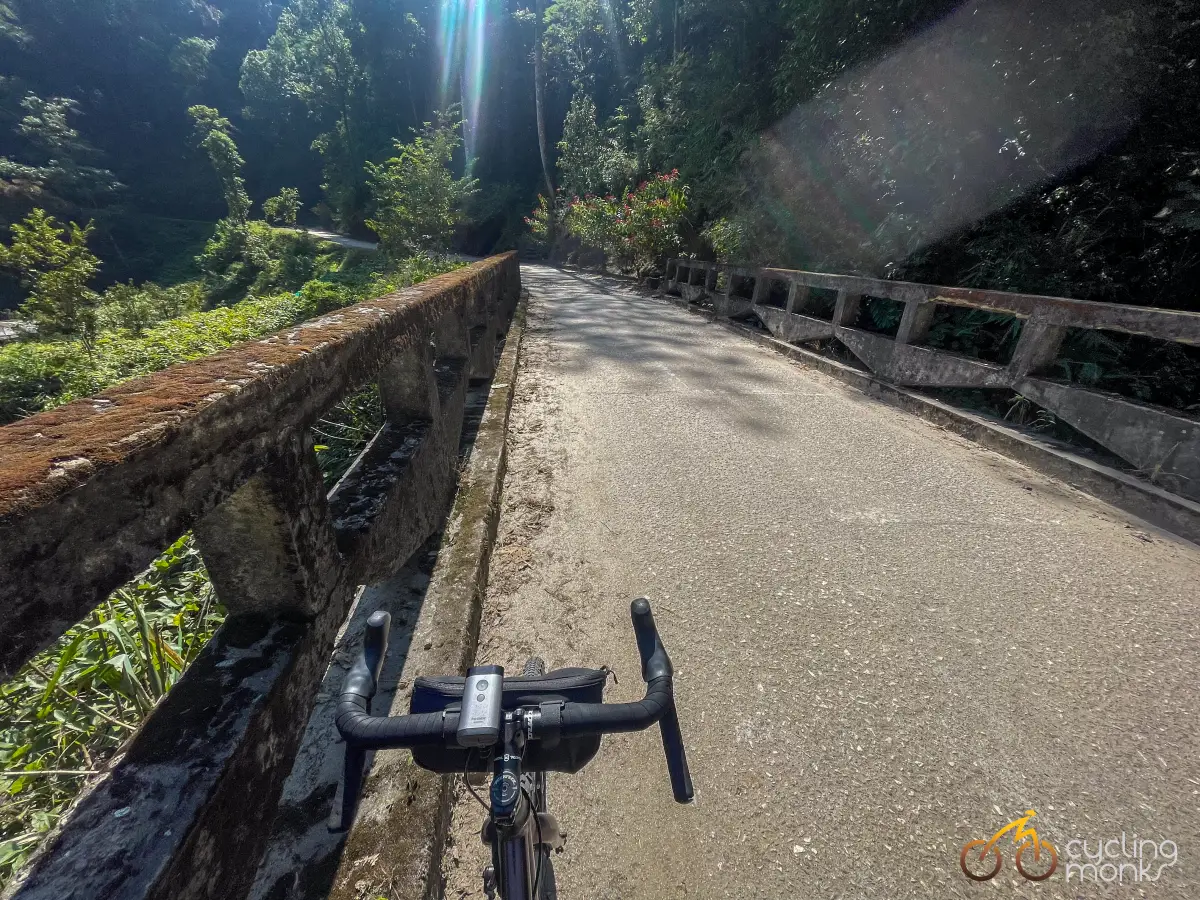
Rolling out through Yuksom’s ornamental gate around 9 AM, the road immediately pitched downhill and deteriorated into a bone-jarring obstacle course. Between the broken tarmac and Chaitra’s brakes finally giving up the ghost at Kanchenjunga Waterfalls, progress was painfully slow. Tourists were happily ziplining overhead while we munched on guavas, rather less happily contemplating our mechanical predicament.
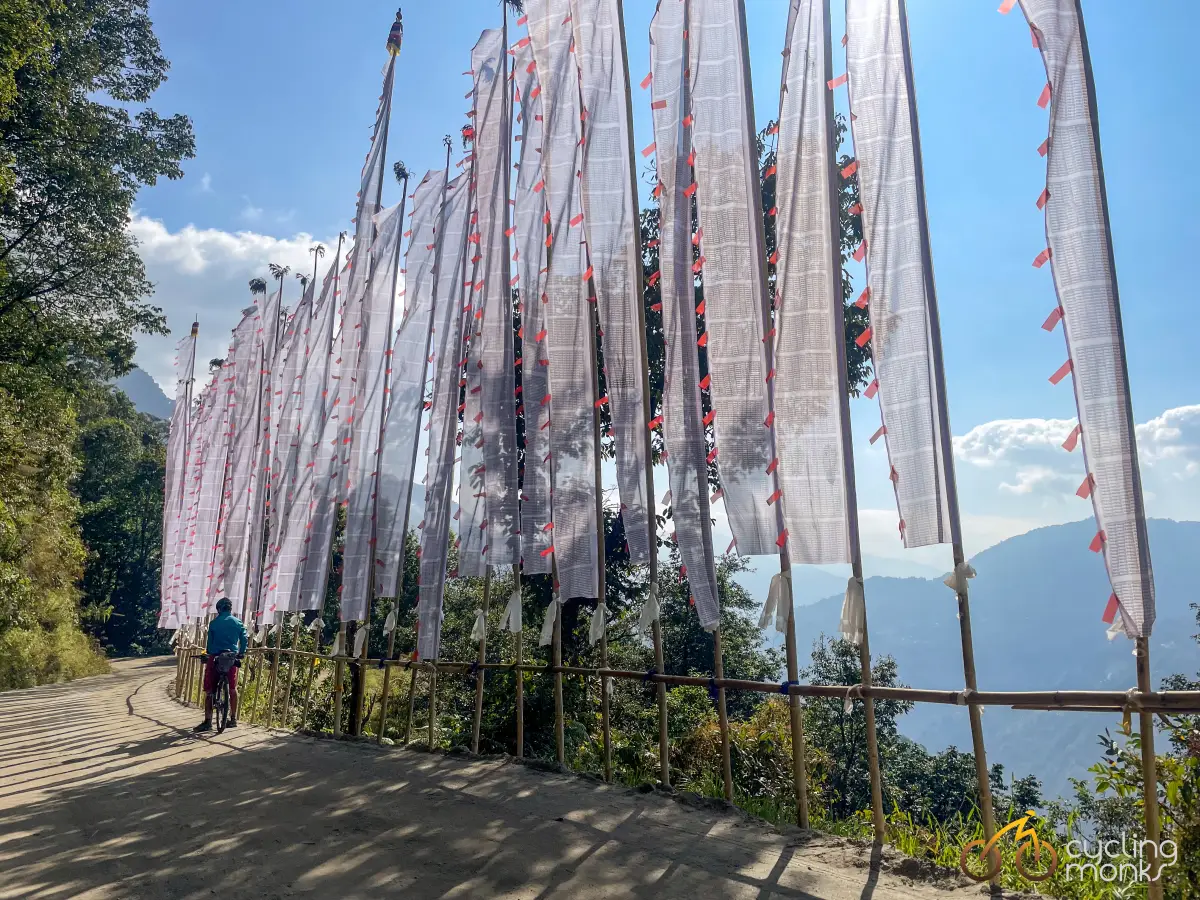
‘Brake’down
I performed some rudimentary roadside jugaad on her brake cables (read: tightening the bolts), praying it would hold until we reached civilisation. The brakes had already been giving us grief earlier in the trip, and this was their latest, and most dramatic, protest.
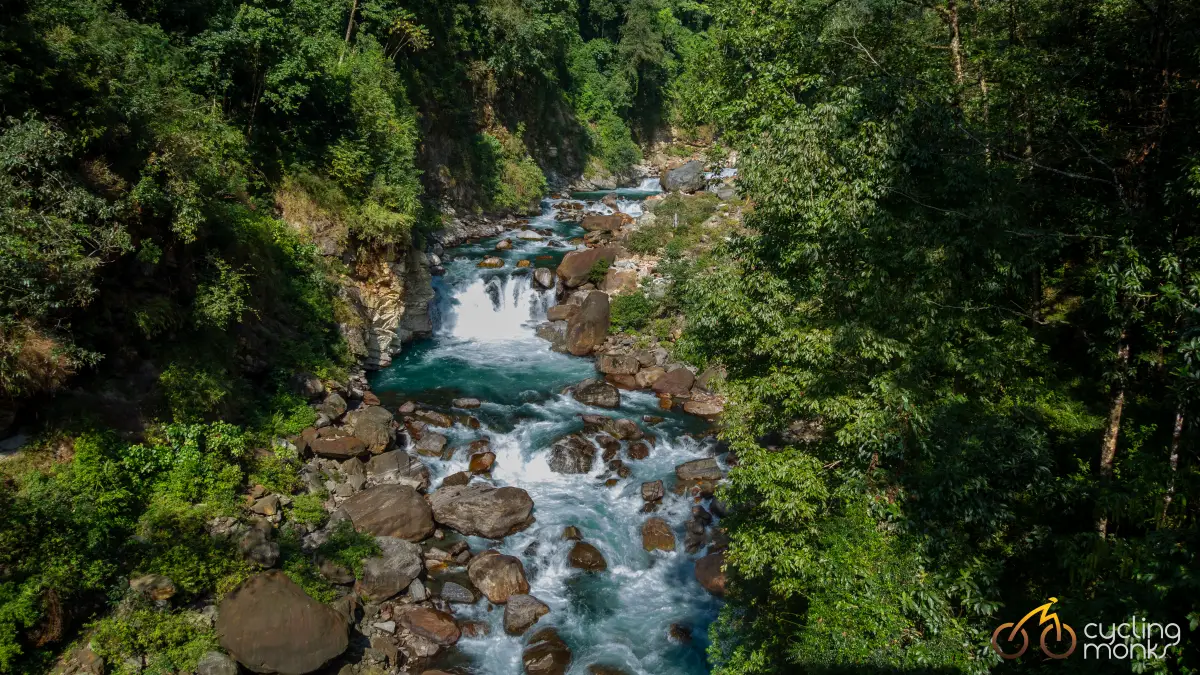
The entire valley bore the fresh scars of landslides from a month earlier, with central paramilitary forces stationed in temporary camps as rehabilitation work continued. Once we turned onto the main highway near Rimbi and followed the river valley around the 15-kilometre mark, the road surface magically turned to butter. It was almost as if someone had remembered that roads were supposed to be smooth. But the landscape soon reminded us of the damage nature had inflicted here, with Rimbi along the river having suffered an equally devastating landslide.
What’s The Point Of Climbing Pelling
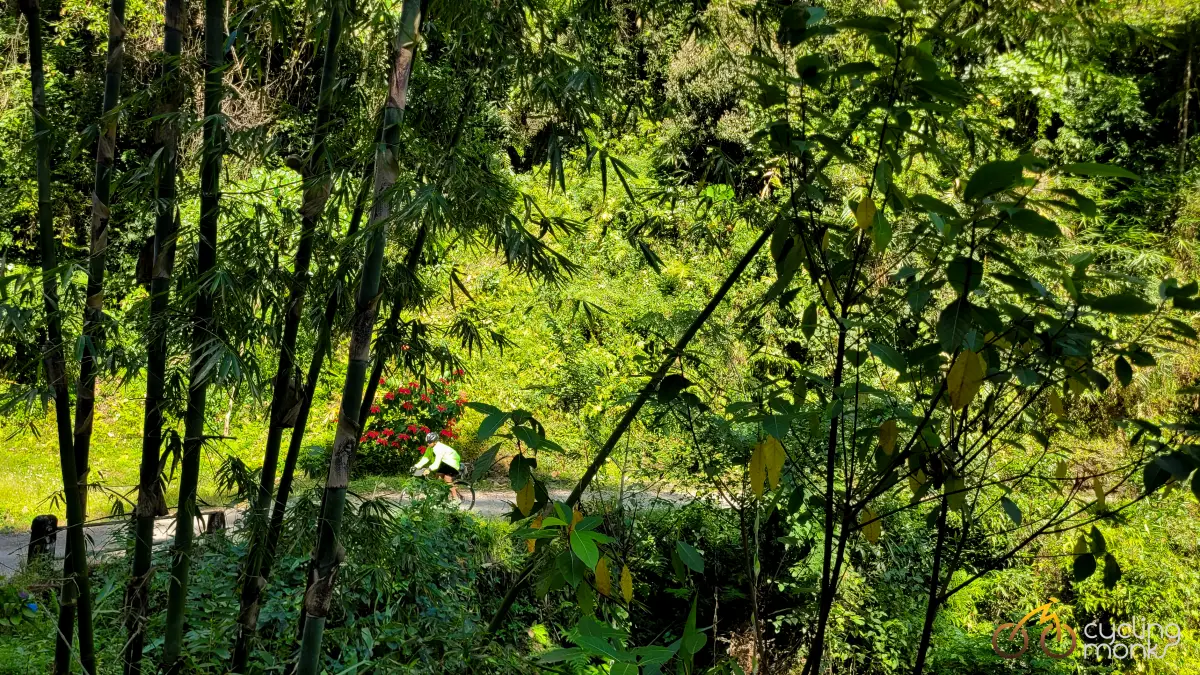
Crossing the river, the climb to Pelling began in earnest. We gained over 935 metres as we wound our way upwards past Darap, a village lined with hardware stores and an unexpected astroturf football pitch. It was here that we crossed paths with the young schoolboy walking eight kilometres home to Pelling.
He looked at our loaded cycles and genuinely wondered why anyone would willingly visit his hometown. His question was simple enough: “Why are you going to Pelling? There is nothing there.”
He had a point.
Concrete Jungle In The Hills
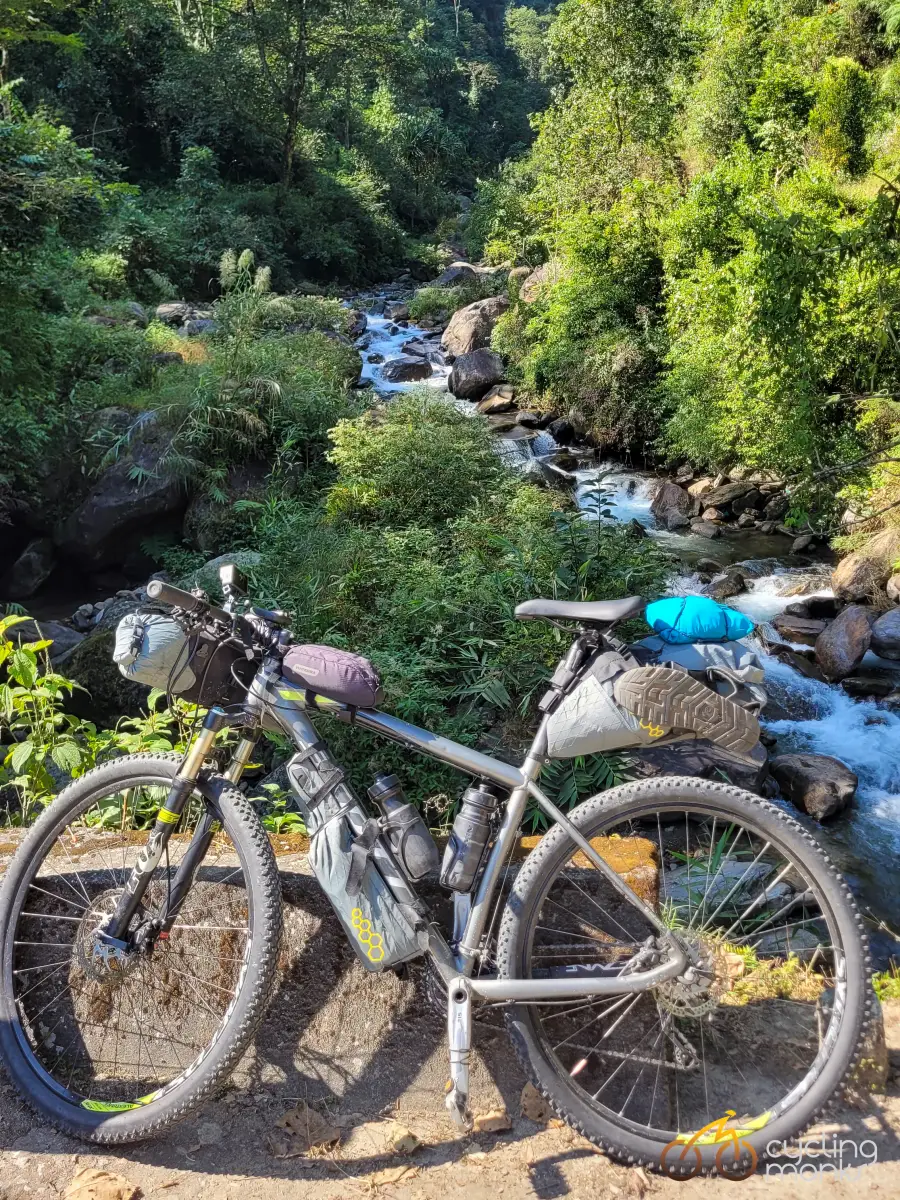
As traffic thickened and we rolled into Pelling after nearly seven hours on the road, we were greeted by a solid, uninterrupted wall of concrete hotels stretching for over a kilometre. Whatever expectations we had built up about a quaint Himalayan hill town were quickly put to rest. We settled into a budget-friendly hotel in Lower Pelling, only later realising that Upper Pelling would have provided a better view of the snow covered peaks.
By 5 PM, pitch darkness had descended. We were also introduced to our very first canine reception committee in Sikkim: a local dog who made it his personal mission to bark at and chase us as we walked towards the market. We had to run his gauntlet twice more on our way to and from Big Bowl, a tiny eatery where we devoured pork curry cooked with fresh local greens and veg momos.
The only thing missing was the veg Sikkimese thali we had ordered. We waited an eternity for it, only to discover that the kitchen had promptly forgotten to make it. A long day in the saddle, followed by a long climb, followed by a long wait for a meal. The only thing guaranteed to be on time, was our dear furry nemesis barking at us, and only us, every time we walked past his favourite haunt. Welcome to Pelling.
Day 6: Pelling: Skywalks, Empty Cable Cars, and Serene Monasteries
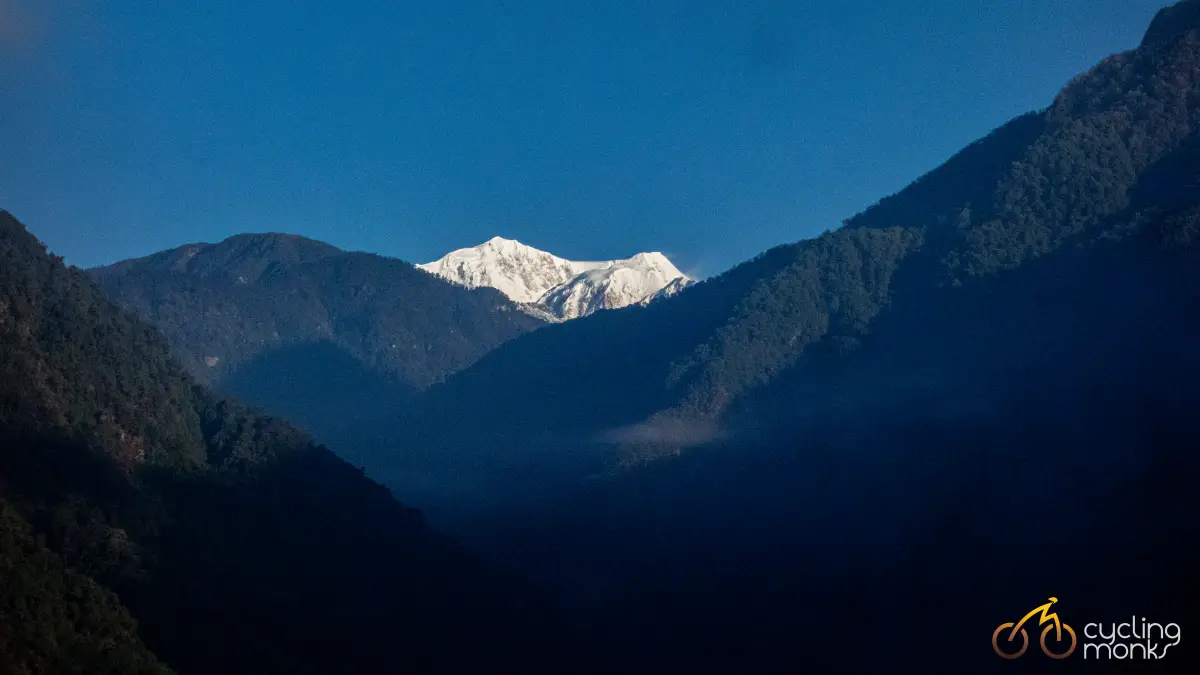
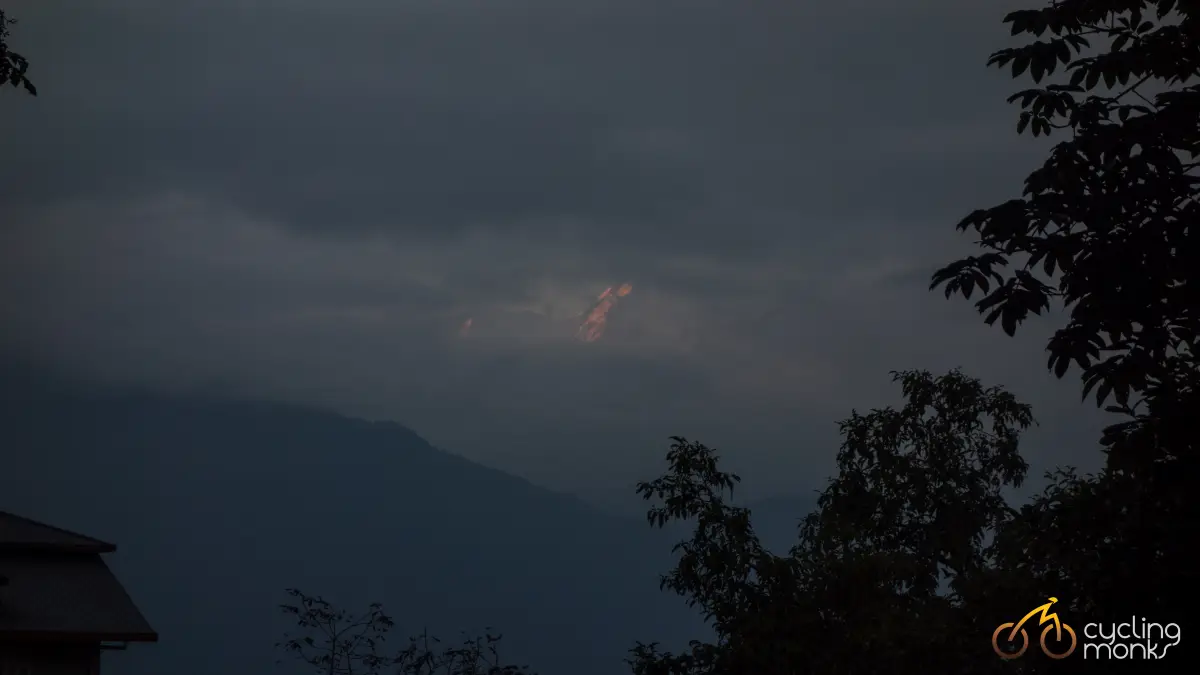
We dragged ourselves out of bed at dawn, hoping to catch the golden sunrise over Kanchenjunga, only to be greeted by a thick curtain of clouds. The clouds couldn’t dampen our spirits, and we enjoyed whatever glimpses of the mountains they chose to offer us.
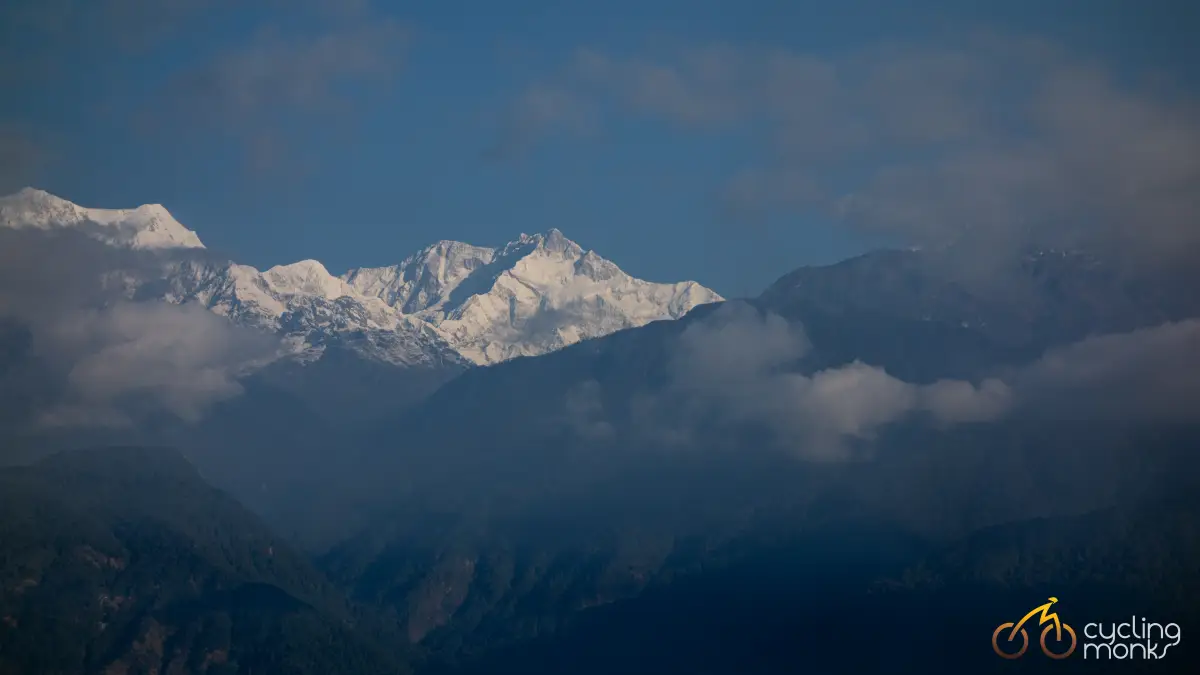
Breakfast was included at the hotel, giving Chaitra her very first taste of Bengali luchi and sabji. The hotel was owned by a Marwari businessman from Siliguri, which perhaps explained the familiar business model. As the entire road is lined with copy-paste hotels in Pelling. One of the major tourist destinations in West Sikkim. Everybody visits for the view of the mighty Kanchenjunga.
Over breakfast, we got talking to a young staffer from Kolkata. He had been in Pelling for all of fifteen days, was already thoroughly bored of looking at Kanchenjunga, and dreamed of moving to Greece to become a bartender. Fifteen days. That’s all it took for one of the world’s most spectacular mountain backdrops to lose its charm. Remember the schoolboy from earlier?
Determined to give our butts a rest, we set off on foot, only to log 14 kilometres and nearly 600 metres of vertical climbing. So much for a rest day.
Sky Walk = Walk Towards The Sky at 20% Gradient Paths
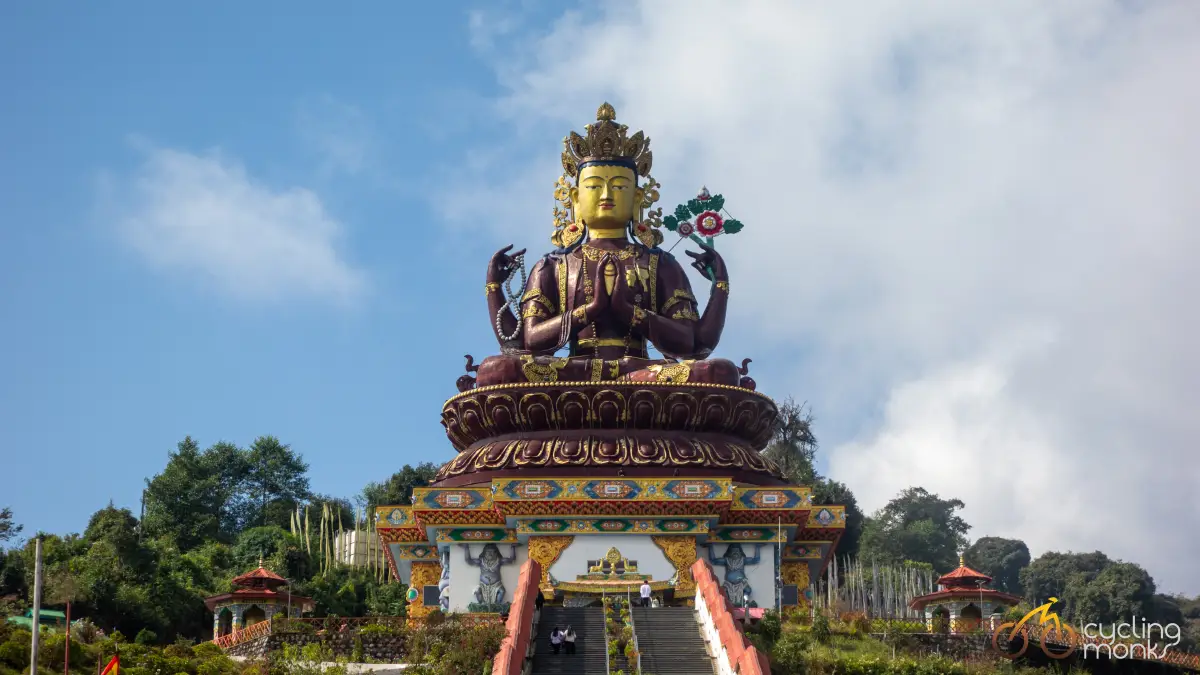
Our first stop was a steep hike up to the towering Chenrezig (Guru Rinpoche) Statue and Skywalk. Unlike the quiet spirituality of Rumtek or Dubdi, this was pure tourism. Noisy crowds from Bengal and Maharashtra, zero monks, and a glass-bottomed skywalk that made very little architectural sense when the giant statue you had come to see was above you, not beneath your feet. One really wonders at the grand intellect of the government babus, even after having passed multiple tough examinations.
The experience was a world away from the atmosphere at the monasteries we had visited earlier. Here, the focus seemed to be less on quiet contemplation and more on getting the obligatory photographs.
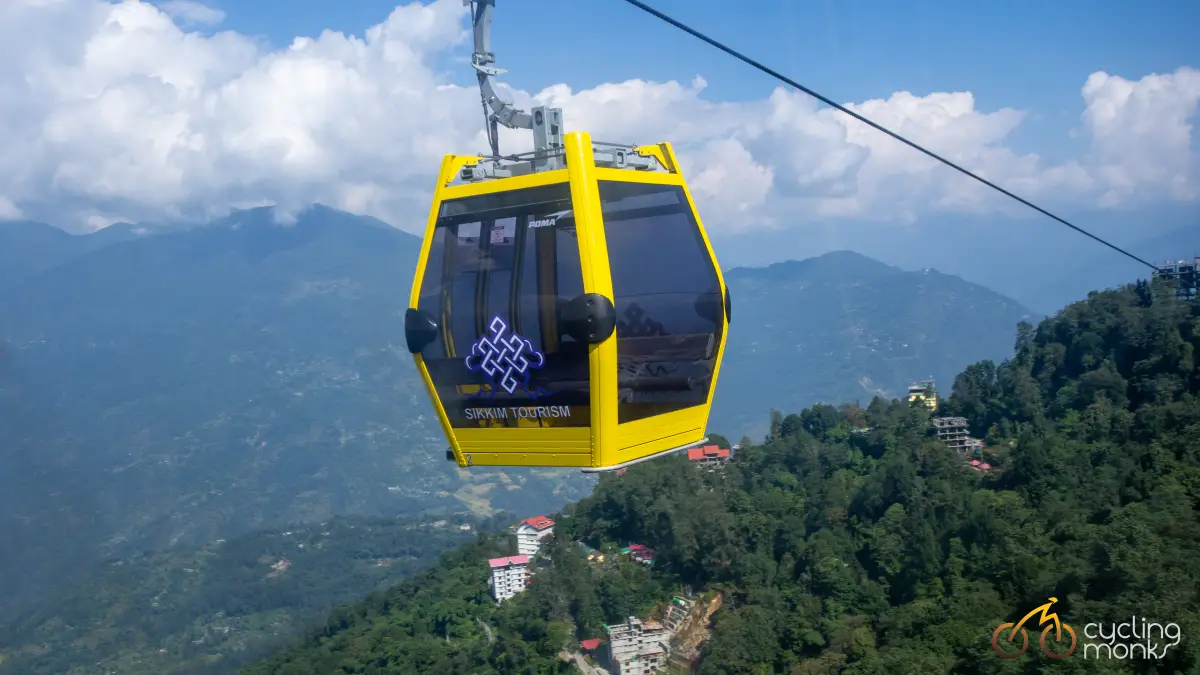
To get back down to the market, we hopped onto Pelling’s spanking-new cable car, applying a cheat code to skip two kilometres of walking. The gondola ride was over in two minutes. Given how new the project was, there wasn’t even a signboard directing tourists to the station, and we had the cabin entirely to ourselves.
Meanwhile, hundreds of tourist cabs continued to clog the narrow mountain road above. It was a curious sight. Unless the authorities put up proper signage, price it sensibly and restrict cab traffic up to the statue, this shiny new infrastructure risks rusting away into irrelevance.
Serene Monastery After the Hubbub
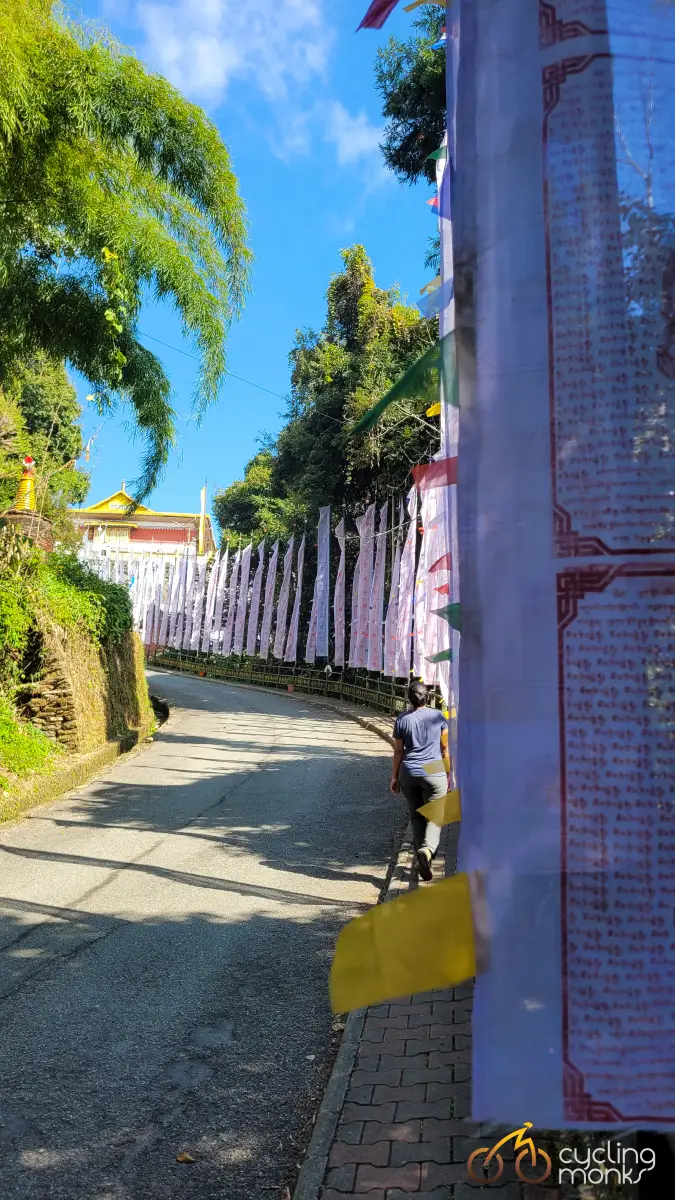
Escaping the tourist din, we walked another four kilometres along a quiet forest ridge to Sanga Choeling Monastery. Built in the late 17th century, this tiny historic gompa is said to have been established following a dream vision experienced by its founder, Lhatsun Namkha Jikme. It was blissfully empty, offering the exact opposite atmosphere of the commercial bustle down the hill.
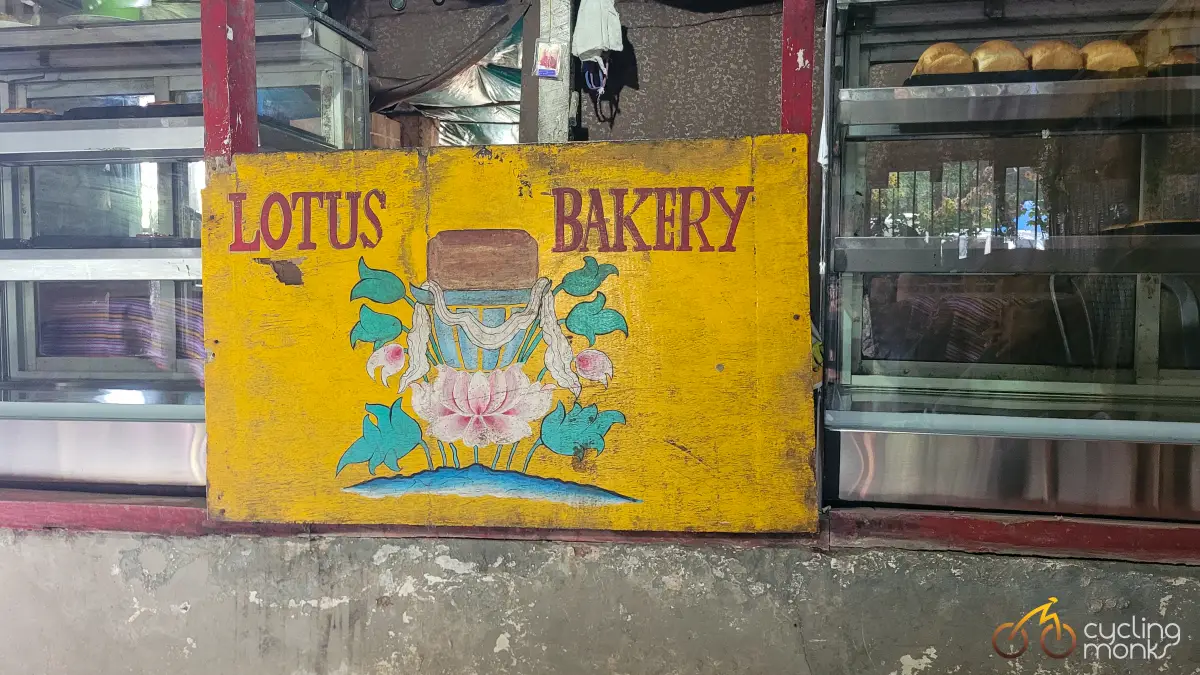
On our walk back to the hotel, we stumbled upon Lotus Bakery, a tiny gem run single-handedly by a local lady. Her main customers were students from the school across the road, and we stopped for coffee, apple pastry, a coconut bun and a vanilla muffin. Over our little bakery break, we learned that the baking equipment had been provided through a Sashastra Seema Bal (SSB) community development initiative. A rather interesting example of how a small local enterprise can get a helping hand and find its own place in the community.
Rest & Relaxation… Finally!
Back at the hotel, Chaitra celebrated the rest day with the ultimate luxury, oiling and washing her hair, while I waged another unsuccessful battle trying to coax life back into her cycle’s brakes. I was almost certain that the brake pads were fully worn out, but I didn’t want to open it up to check, because we sometimes like living like ostriches.
Since there was a lot of time to kill, after it got dark and before dinner, we spent the evening over carrom and ping-pong. It was a fun game night and I can’t seem to remember who won (she did).
Dinner at Kabur Hotel provided the comic highlight of the day. Chaitra confidently rattled off her dinner order to another dining guest, mistaking him for the waiter. I’m not sure who was more surprised: the poor gentleman or Chaitra when she realised her mistake.
Between decent pork taipo (giant steamed buns), okayish egg noodles and decidedly forgettable Schezwan fried rice, we fuelled up for the road ahead. Walking back to the hotel, we passed our canine nemesis for the umpteenth time. Thankfully, he was fast asleep and couldn’t be bothered to bark. After all, even the most dedicated reception committee needs an evening off.
Also read our bikepacking travelogues in the Western Ghats and Konkan Coast.